
How Liquidation Auctions Work in Canada: Process, Pros, and When They Make Sense
Learn how liquidation auctions work in Canada, including the commercial auction process, advantages, costs, removal, and when a direct sale makes more sense.
A liquidation auction allows a business to sell surplus commercial assets through competitive bidding rather than negotiating with one buyer. If you're researching how liquidation auctions work in Canada, the process generally moves from inventory and valuation to lot creation, buyer bidding, payment, and final asset removal
Auctions can be useful because they expose assets to multiple buyers and establish a defined sales period. But they do not automatically produce the highest return or the fastest clearance.
For businesses considering an auction, the real question is whether competitive bidding will produce a stronger net recovery than a direct sale, bulk purchase, or another form of commercial asset liquidation.
What Is a Liquidation Auction?
A liquidation auction is a structured sale where business assets are offered to buyers who submit competing bids.
Businesses may use auctions when:
- closing or consolidating a location
- downsizing a warehouse or office
- upgrading machinery or equipment
- clearing surplus inventory
- selling assets during a restructuring
- completing a larger business liquidation
An auction is only the sales method. Liquidation is the broader process of assessing assets, recovering available value, arranging removal, and dealing with anything that remains unsold.
A company also does not need to be insolvent to hold one. Operating businesses regularly liquidate equipment simply because it is no longer required.
How Liquidation Auctions Work
Most commercial liquidation auctions follow a similar sequence.
1. Inventory the Assets
Start with a clear list of what is being sold.
For equipment, record information such as:
- manufacturer and model
- quantity
- age
- condition
- serial number where relevant
- specifications
- photographs
- known defects
- available removal date
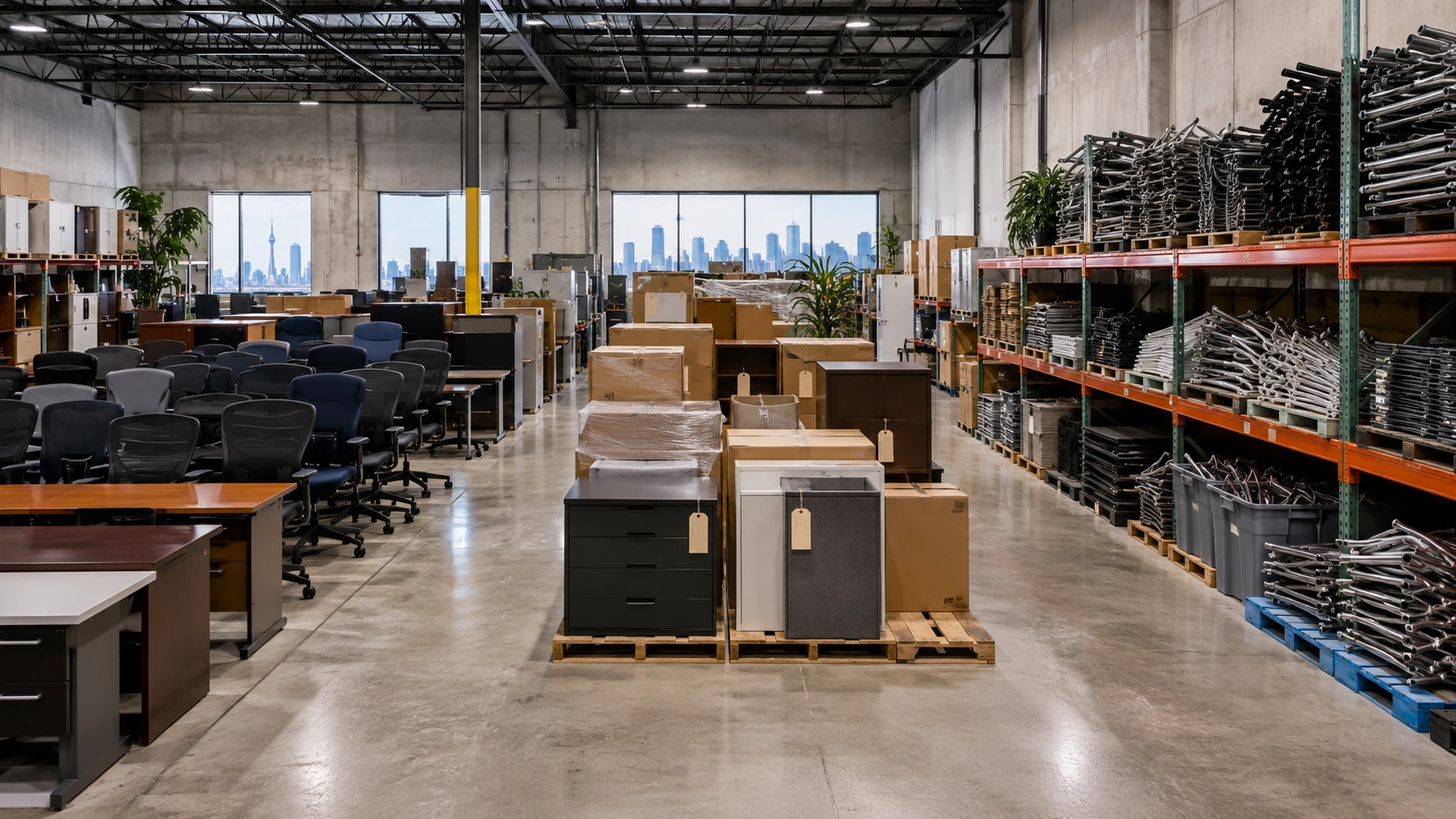
An office may group 50 matching chairs into one lot, while an expensive piece of machinery may justify an individual listing.
MGT's commercial liquidation process similarly starts with an inventory and asset assessment before the sales method is selected.
2. Establish a Realistic Value
Original purchase price is not the same as current liquidation value.
BDC's guidance on valuing used equipment distinguishes between fair market value, orderly liquidation value, and forced liquidation value.
The amount an asset can recover depends on factors including:
- condition
- age
- remaining useful life
- buyer demand
- available selling time
- location
- removal requirements
A rushed auction held immediately before a lease deadline can produce a different result from a sale with several weeks available for buyer outreach.
3. Create the Auction Lots
Assets can be sold individually or grouped.
Lot size matters. A lot of 500 chairs may be convenient for the seller but eliminate smaller buyers who only need 20. At the same time, dividing an entire office into hundreds of small lots can create unnecessary administration and dozens of separate collections.
The best grouping balances buyer demand with removal efficiency.
4. Publish the Sale and Accept Bids
Buyers review the listings and bid according to the auction terms.
Canada's federal government uses a similar model through GCSurplus, its online system for selling surplus government assets.
Private liquidation auctions establish their own rules, but listings typically define:
- bidding deadlines
- payment requirements
- inspection opportunities
- asset condition
- pickup dates
- loading responsibilities
- applicable fees
- treatment of unsold assets
These terms need to be clear before bidding begins.
5. Complete Payment and Removal
Closing the bidding does not complete the liquidation.
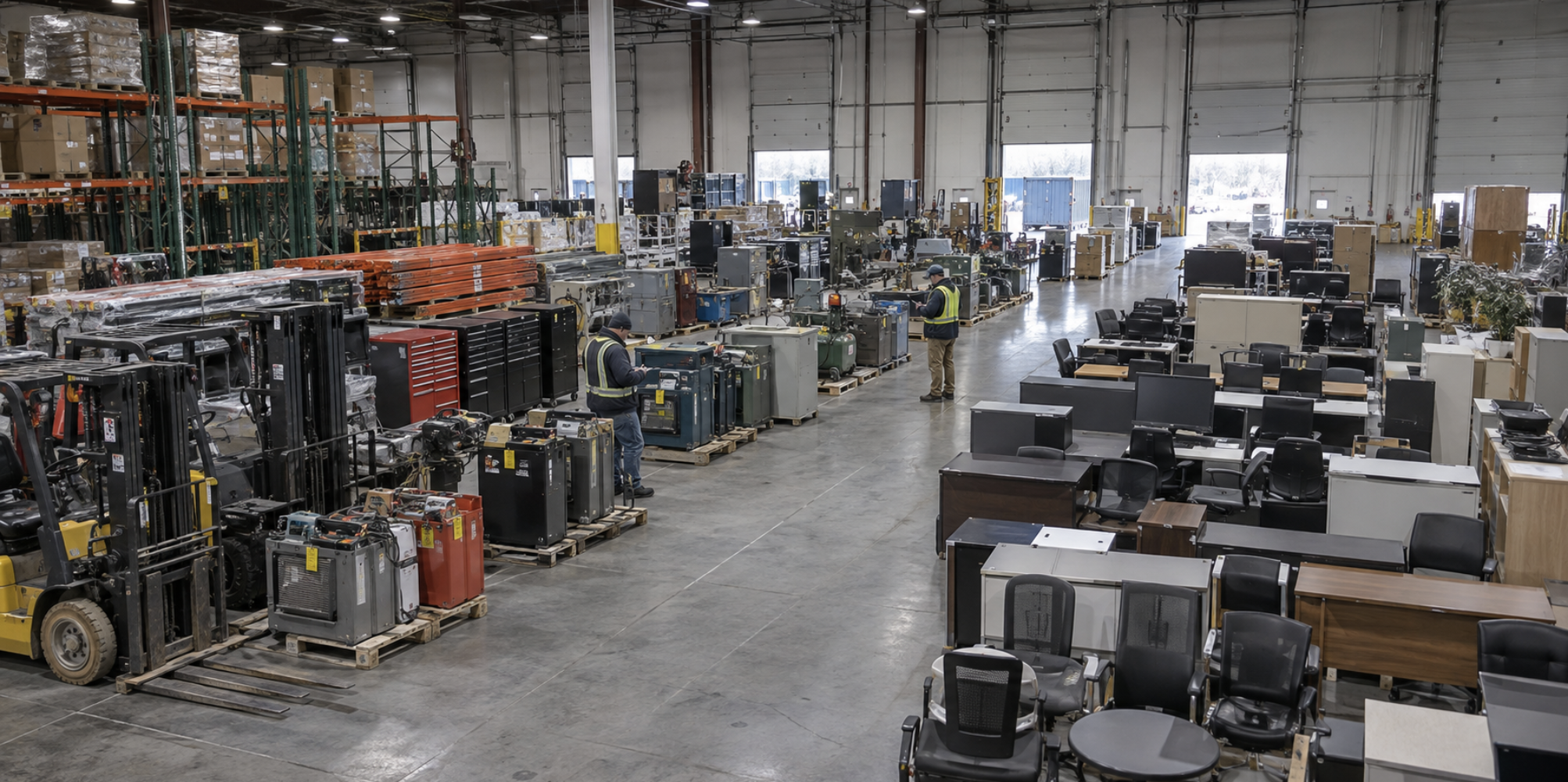
Successful buyers still need to pay and collect their assets. For large equipment, collection may involve dismantling, forklifts, freight elevators, rigging, loading docks, or specialized transportation.
This is why removal responsibilities need to be established in advance.
A high winning bid becomes much less attractive if the seller unexpectedly remains responsible for several thousand dollars of dismantling and transportation.
The Advantages of Liquidation Auctions
Competitive Bidding Can Help Establish Market Value
An auction gives multiple buyers the opportunity to compete for the same asset.
When several qualified buyers want a piece of machinery or equipment, that competition can help reveal what the market is prepared to pay.
This is particularly useful when the seller knows an asset has value but does not have an obvious negotiated selling price.
Auctions Can Reach More Buyers
Online auctions can expose equipment to buyers outside the immediate local market.
That can be useful for standardized commercial assets such as:
- forklifts
- machinery
- warehouse equipment
- technology
- vehicles
- specialized commercial equipment
The broader market only helps when transportation economics still make the purchase worthwhile for the buyer.
The Sale Has a Defined Timeline
Traditional listings can remain active indefinitely.
An auction creates a clear bidding period with a defined closing date. That can make the sales stage easier to coordinate within a larger relocation or facility closure.
The collection period still needs to be planned separately.
Different Assets Can Be Sold Differently
A business does not need to auction its entire facility as one lot.
Higher-value machinery can be sold individually while standardized furniture or shelving is grouped into larger lots.
That flexibility can help match each asset category with the buyers most likely to want it.
The Drawbacks of Liquidation Auctions
The Highest Bid Is Not the Same as the Best Net Result
Gross auction proceeds are only one side of the calculation.
Depending on the arrangement, the seller may still incur:
- auction or project fees
- preparation costs
- dismantling
- transportation
- storage
- labour
- clearance costs for unsold assets
MGT's guide to commercial liquidation costs in Canada makes the same distinction between gross cost and net recovery.
The useful calculation is:
Net recovery = sale proceeds minus seller-paid costs and remaining clearance expenses.
Auctions Depend on Buyer Demand
Competitive bidding only works when there is competition.
A common piece of commercial equipment may attract several interested buyers. A highly specialized machine may have only one realistic purchaser.
In those cases, direct outreach can sometimes make more sense than building an auction around a small buyer pool.
Preparation Takes Time
Auctions are not automatically the fastest liquidation method.
The process can include inventory, valuation, photography, cataloguing, marketing, inspections, bidding, payment, and removal.
If a business already has a qualified buyer willing to purchase and remove an entire asset group, a negotiated whole-lot sale may be faster.
When Does a Liquidation Auction Make Sense?
An auction is worth considering when several conditions line up.
There Are Multiple Likely Buyers
Auctions work best when several businesses could realistically use the equipment.
Competitive bidding has little value when the potential buyer market is extremely narrow.
Individual Assets Have Meaningful Value
An expensive forklift, machine, or specialized equipment unit may justify its own competitive sale.
Hundreds of low-value miscellaneous items may be better grouped into larger lots or sold through another channel.
There Is Time to Market the Assets
Buyer exposure matters.
If the business has enough time to prepare listings, reach the right market, and allow inspections where appropriate, the auction has a better opportunity to attract meaningful competition.
The Business Wants Market-Based Price Discovery
An auction can be useful when management does not have a clear negotiated price and wants buyers to establish the market through bidding.
The Facility Can Handle Multiple Pickups
Selling 20 lots to 15 buyers creates more collection activity than selling everything to one purchaser.
Make sure the building, loading dock, security arrangements, and project schedule can support that.
When a Direct Sale May Make More Sense
An auction should not be the default for every liquidation.
A direct or whole-lot sale may be more practical when:
- the clearance deadline is extremely tight
- one buyer is willing to take most or all of the inventory
- the assets have a narrow buyer market
- price certainty is more important than competitive bidding
- the inventory has relatively low individual values
- coordinating multiple collections would create a problem
MGT's guide on how to approach the sale of liquidated assets covers this comparison in more detail.
Large liquidation projects can also combine methods. Machinery might go through an auction while furniture is sold in bulk and lower-value assets move through donation, recycling, or disposal.
What Happens to Assets That Don't Sell?
Not every auction lot will sell.
That does not matter much when the business has months available. It matters enormously when the premises need to be vacant next week.
Before the auction begins, establish a fallback for unsold assets.
Options may include:
- direct buyer outreach
- regrouping assets into a bulk lot
- donation
- recycling
- disposal
The auction should be part of the clearance plan, not the only clearance plan.
Frequently Asked Questions About Liquidation Auctions in Canada
Are liquidation auctions only for bankrupt businesses?
No. Businesses also use auctions during relocations, downsizing, equipment upgrades, warehouse consolidations, and ordinary commercial asset clearances.
Are liquidation auctions held online?
Many are. Online bidding allows buyers to participate remotely while the physical equipment remains at the seller's site until collection.
Does an auction guarantee a higher price?
No. Competitive bidding can improve price discovery, but the result depends on buyer demand, marketing, asset condition, timing, and the terms of the sale.
Who removes equipment after an auction?
That depends on the auction terms. The buyer may be responsible for dismantling, loading, and transport, or some of that work may remain with the seller. Establish those responsibilities before bidding begins.
Can auctions and direct sales be used in the same liquidation?
Yes. Different asset categories can use different sales channels. In many larger projects, that produces a more practical result than forcing the entire inventory through one method.
Quick Recap
- Auctions use competitive bidding to sell surplus commercial assets.
- Inventory and valuation come first before assets are divided into sale lots.
- Competition can improve price discovery when multiple buyers want the same equipment.
- Online auctions can expand buyer reach, but removal still needs to be coordinated physically.
- Auctions are not automatically faster or more profitable than negotiated sales.
- Net recovery matters more than the highest bid.
- A fallback is essential for anything that remains unsold.
Explore Your Auction and Direct-Sale Options
An auction is only one way to recover value from surplus commercial assets. Michael's Global Trading can assess your inventory and compare auctioning suitable assets with direct buyer outreach, bulk transactions, and other commercial asset liquidation options.
Send us your inventory, photographs, location, and required completion date. We'll assess the assets and determine which sales approach fits the buyer market and clearance timeline.
Recommended Readings
How to Approach the Sale of Liquidated Assets
What Does a Commercial Liquidation Company Actually Do? A Process Breakdown
Recommended readings:

Blogs & News

Get started on
your journey with us.