Choosing a commercial liquidation company is about more than finding someone willing to clear a building. The right partner should be able to assess your assets, explain how they plan to recover value, coordinate removal, and account for anything that does not sell.
The best proposal is not necessarily the one with the highest resale estimate or the lowest removal quote. Compare the complete scope and net result before making a decision.
Use this checklist when evaluating liquidation companies in Canada.
1. Confirm the Company and Its Experience
Start with basic due diligence.
Confirm the company's legal business information and operating history. Canada's Business Registries provides a government-supported way to search participating provincial registries and Corporations Canada. Search Canada’s Business Registries
Then look at relevant project experience.
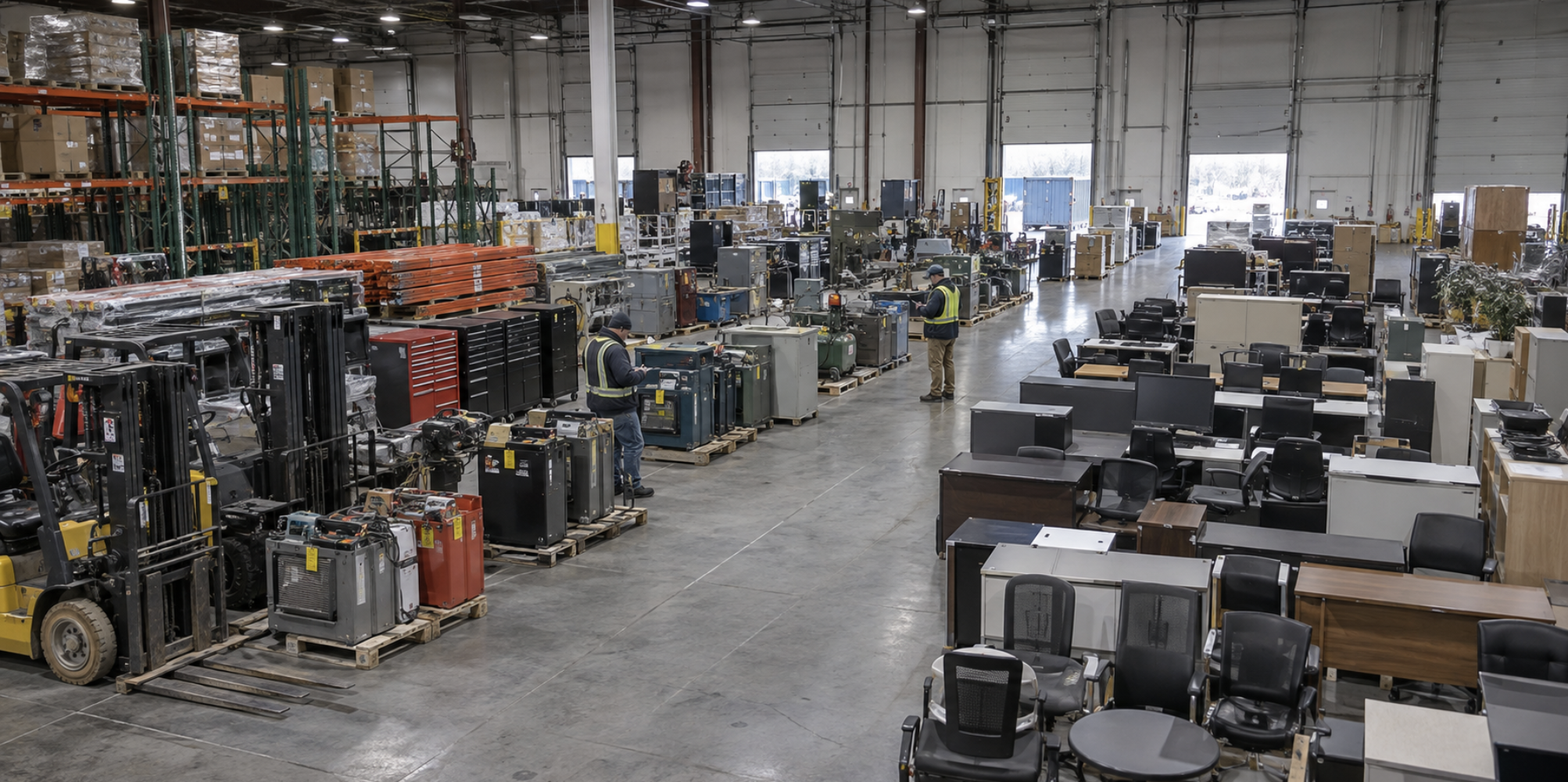
Commercial liquidation can involve very different asset categories, including:
- office furniture
- warehouse racking and equipment
- machinery
- retail fixtures
- electronics
- surplus inventory
A provider experienced with office furniture may not necessarily have the same buyer network or removal capabilities for industrial equipment.
Ask for examples of projects involving assets and facilities comparable to yours.
MGT's commercial asset liquidation services cover office, retail, warehouse, technology, and equipment projects.
2. Ask for a Written Asset and Recovery Assessment
A liquidation company should be able to explain where its recovery estimate comes from.
The assessment should consider:
- condition
- manufacturer and model
- quantity
- completeness
- current buyer demand
- available selling time
- location and removal complexity
Avoid relying on a single recovery figure without understanding the assumptions behind it.
A stronger proposal identifies which assets are expected to generate value, which have limited demand, and which may require another disposition route.
MGT's commercial liquidation process similarly begins with an asset inventory and recovery assessment before a sales strategy is selected.
3. Find Out How the Assets Will Be Sold
A commercial liquidator needs more than a removal crew. It needs access to buyers.
Ask how each major asset category will be marketed. Depending on the inventory, that might include:
- direct buyer outreach
- bulk or whole-lot sales
- wholesale transactions
- liquidation auctions
- specialized equipment buyers
The answer should be specific to your assets.
If a company recommends auctioning everything, ask why. If it recommends a bulk sale, ask how that affects price and clearance speed.
A useful question is:
Who is the likely buyer for our most valuable assets?
If the provider cannot give you a clear answer, investigate further.
4. Compare Net Recovery, Not Just the Quote
Two proposals can look very different while producing similar final results.
One liquidator may project higher resale proceeds but charge separately for labour, trucks, dismantling, disposal, and project management. Another may offer less recovery but include much more of the clearance work.
Compare:
Net result = asset recovery minus the costs your business still has to pay.
Ask each provider to identify:
- expected resale recovery
- liquidation or project fees
- dismantling costs
- labour
- transportation
- recycling or disposal charges
- any additional access or after-hours costs
MGT's guide to commercial liquidation costs in Canada makes the same distinction between gross project cost and recovery.
5. Confirm the Full Removal Scope
Selling the assets is only part of the project.
Depending on the site, you may also need:
- furniture disassembly
- racking teardown
- equipment disconnection
- loading and transportation
- recycling
- debris removal
- final cleanout
Ask exactly where the liquidator's responsibility ends.
This is especially important when a lease expiry creates a hard deadline. A provider that sells the most valuable assets but leaves everything else behind has not completed the clearance.
The written scope should explain what happens to the full inventory.
6. Verify Insurance and Workplace Documentation
Anyone sending crews into your facility should be able to provide the documentation required by your organization or property manager.
In Ontario, this may include proof of insurance and current WSIB clearance where applicable. A WSIB clearance confirms that a contractor is registered and in good standing. Check a WSIB clearance
Ask for these documents before mobilization rather than on removal day.
MGT states that applicable commercial projects can be supported with insurance and WSIB documentation.
7. Review the Logistics Plan
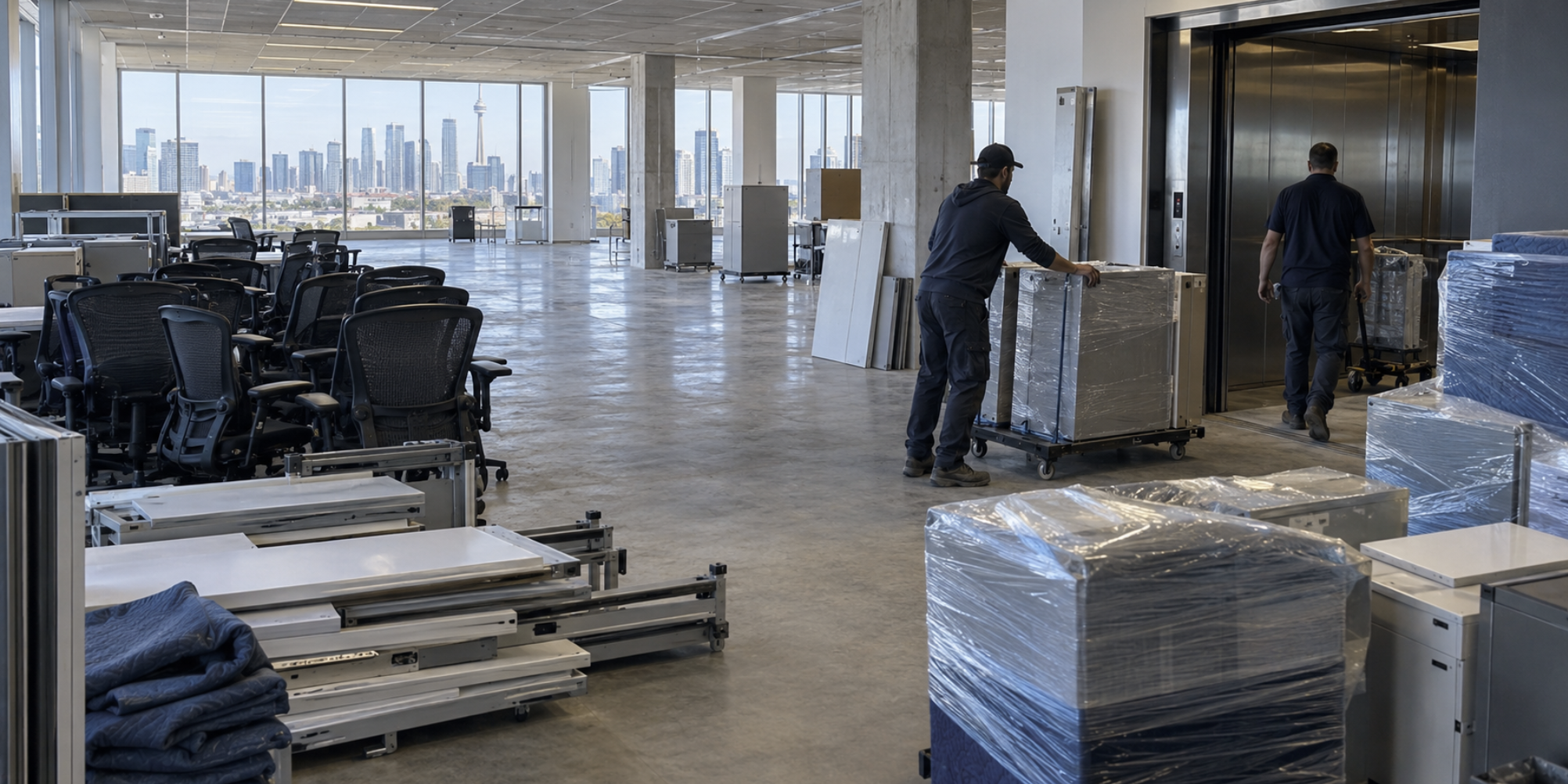
A credible liquidation proposal should address how the assets will physically leave the site.
Confirm:
- freight elevator access
- loading dock bookings
- truck scheduling
- after-hours requirements
- dismantling
- heavy-equipment handling
- collection sequencing
This is particularly important in downtown offices, occupied buildings, and warehouses containing large installations.
The proposed completion date should account for these logistics, not just the estimated selling period.
8. Ask What Happens to Unsold Assets
Not every item will necessarily find a buyer.
Before choosing a liquidator, establish the fallback for unsold assets.
That may include:
- another direct-sale attempt
- donation
- recycling
- e-waste processing
- disposal
Also confirm who pays for that work.
A complete liquidation strategy accounts for the entire inventory rather than leaving lower-value assets until the end.
MGT's commercial asset liquidation services can combine resale with other disposition routes for remaining assets.
9. Check the Process for IT Equipment
If computers, servers, phones, printers, or storage devices are included, ask how data-bearing assets are handled.
Confirm:
- how devices are inventoried
- when custody transfers
- how data is sanitized or destroyed
- what documentation is provided
- how non-resalable electronics are recycled
Do not assume that a general furniture or equipment liquidator automatically has the right process for sensitive IT assets.
10. Request Comparable References and Final Reporting
Ask for references from projects similar in size, asset type, and complexity.
A useful reference can tell you whether the provider:
- completed the work on schedule
- communicated clearly
- stayed within the agreed scope
- handled changes professionally
- avoided unexpected costs
Also ask what records you will receive when the project is finished.
Depending on the engagement, this can include final asset reconciliation, recovery summaries, donation records, recycling documentation, and project-completion confirmation.
MGT's office furniture liquidation and ESG reporting guidance recommends reconciling the original inventory against final disposition routes.
Red Flags to Watch For
Be cautious when a proposal includes:
- a large recovery promise without an asset assessment
- no explanation of how assets will be sold
- unclear removal responsibilities
- no plan for unsold inventory
- unexplained fees
- no relevant references
- unrealistic completion dates
- no process for data-bearing electronics
- verbal promises missing from the written scope
Any unresolved gap that affects cost, recovery, or completion should be clarified before signing.
Your Liquidation Company Checklist
Before selecting a provider, confirm:
☐ The business and contact information can be verified
☐ The company has experience with your asset categories
☐ You received a written recovery assessment
☐ The proposed sales channels are explained
☐ Costs and recovery are shown separately
☐ Removal and transport responsibilities are defined
☐ Required insurance and workplace documents are available
☐ Building logistics have been considered
☐ Unsold assets have a defined destination
☐ IT equipment has an appropriate data-handling process
☐ Comparable references are available
☐ Final reporting is defined
Use the checklist to compare the differences that materially affect your project's recovery, cost, and deadline.
Frequently Asked Questions About Choosing a Liquidation Company
Should I get multiple liquidation quotes?
For a significant project, yes. Give each provider the same inventory and deadline so you can compare recovery assumptions, scope, and costs properly.
Should I choose the company offering the highest asset value?
Not automatically. Compare the projected recovery with the costs and work that remain your responsibility.
How early should I choose a liquidation partner?
Start once the inventory and approximate clearance date are known. More lead time allows for better buyer outreach, building coordination, and alternative disposition planning.
What should a liquidation proposal include?
Look for the assets covered, proposed sales approach, expected recovery, fees, removal responsibilities, timeline, treatment of unsold assets, and final deliverables.
Quick Recap
- Verify the provider: Check the business, insurance, experience, and references.
- Understand the recovery strategy: Ask how assets will be valued and sold.
- Compare the net result: Do not focus only on the highest recovery estimate.
- Define the full scope: Removal, transport, unsold assets, and final clearance all matter.
- Check operational capability: Make sure the company can work within your building and timeline.
- Require documentation: Know what records you will receive when the project is complete.
Compare Your Shortlist Before You Choose
A commercial liquidation company should be able to explain its valuation, buyer strategy, pricing, removal scope, and final deliverables before work begins.
Michael's Global Trading provides commercial asset liquidation across Toronto and Canada for offices, warehouses, retail locations, technology, equipment, and surplus inventory.
Use the checklist above to compare your shortlist, then send us your inventory, photographs, location, and required completion date. We'll assess the assets and provide a project-specific proposal you can compare against your other options.
Recommended Readings
What Does a Commercial Liquidation Company Actually Do? A Process Breakdown
How Much Does Commercial Liquidation Cost in Canada? A 2026 Pricing Breakdown