
Commercial Office Decommissioning Checklist: 15 Steps to a Clean Lease Handback
Use this 15-step office decommissioning checklist to manage furniture, IT, building access, cleanup, and a clean commercial lease handback.
Commercial office decommissioning is the process of clearing a workplace and preparing it for handback at the end of a lease. Furniture, technology, fixtures, documents, supplies, and waste all need destinations, while building access and any landlord requirements need to be completed before the final deadline.
The exact handback condition comes from your lease and property-management requirements. Some offices require little more than complete removal and cleaning, while others involve fixture removal, wiring work, or additional reinstatement.
A professional office furniture decommissioning project brings those activities into one schedule. Use the following 15 steps to keep the exit organized and avoid leaving major decisions until the final week.
1. Review the Lease and Handback Requirements
Start with the documents that determine what the landlord expects.
Review the lease, amendments, building rules, and any correspondence relating to move-out. Confirm whether the premises need to be empty, broom-clean, restored to a previous condition, or subject to specific reinstatement work.
Create a written list of required handback conditions and resolve unclear items with the landlord or property manager early.
2. Confirm the Final Deadline
Separate the lease expiry date from the date your physical work needs to finish.
The office may need to be clear before the formal lease end so there is time for cleaning, inspections, corrections, and the final walkthrough.
Build the schedule backwards from the landlord handback rather than treating that date as the day furniture removal begins.
3. Complete a Site Walkthrough
Walk the office before booking crews.
Record:
- number of workstations
- conference and reception furniture
- filing and storage systems
- IT and electronics
- appliances
- fixtures
- supplies and miscellaneous contents
- items requiring dismantling
- restricted access areas
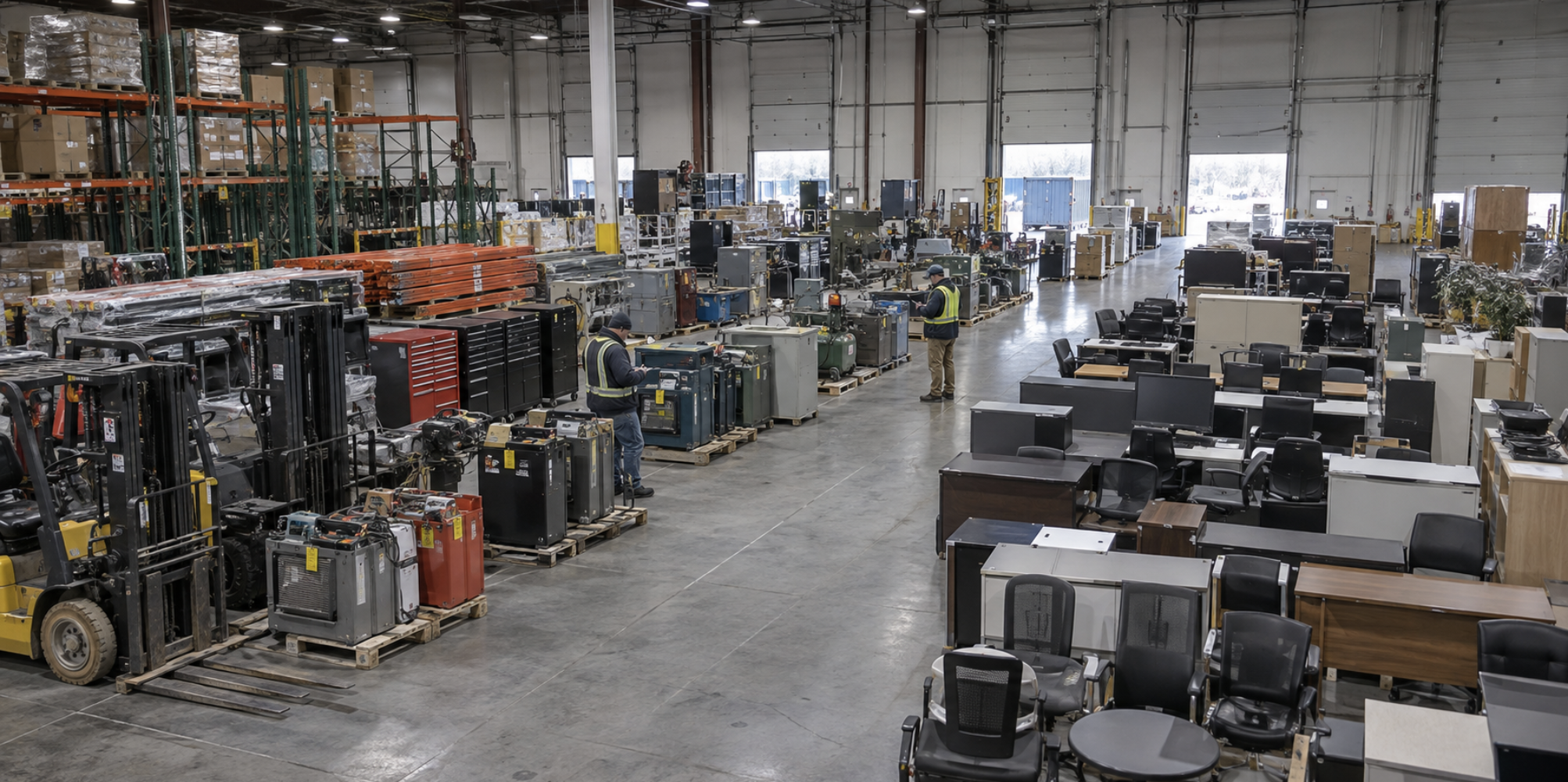
MGT's office decommissioning process begins with an inventory assessment so the removal scope can be planned around the space and deadline.
4. Separate What Stays From What Goes
Do not let the removal crew decide what is surplus on moving day.
Classify assets as:
- moving to the new office
- being retained elsewhere
- available for resale
- suitable for donation
- going to recycling
- requiring disposal
Clearly tag anything remaining in use.
For phased exits, also give furniture and equipment release dates so necessary assets are not removed too early.
5. Assess Assets for Resale
Before treating furniture and equipment as a disposal cost, identify anything with recoverable value.
Task chairs, workstations, storage, recent technology, fixtures, and other commercial assets may have secondary-market demand depending on brand, condition, quantity, and timing.
MGT's office furniture liquidation process evaluates outgoing furniture before deciding what should be sold, removed, donated, or recycled.
Resale planning should happen early. The shorter the selling window becomes, the fewer buyer options remain.
6. Assign Donation, Recycling, and Disposal Routes
Not everything will sell.
Create destinations for the remaining inventory before removal starts. Suitable furniture may go to donation, recyclable materials should be separated where practical, and disposal should address what remains.
A sustainable office decommissioning can combine resale, donation, and recycling within the same project instead of treating each stream separately.
The key is to account for the entire office, not only the most valuable assets.
7. Secure Data and Retire IT Equipment
Computers, servers, phones, copiers, storage devices, and networking equipment need special attention because they may contain business or personal information.
The Office of the Privacy Commissioner of Canada recommends ensuring personal information is fully deleted before electronic devices such as computers, photocopiers, and phones are disposed of. Its guidance on limiting use, disclosure, and retention also calls for secure disposal methods that prevent privacy breaches.
Inventory data-bearing devices before they leave your control and establish the required sanitization process.
For equipment without further use, MGT provides e-waste recycling as part of broader facility exits.
8. Remove Confidential Paper Records
Do not mix old files into general office recycling without reviewing what they contain.
Separate records that need to be retained from documents approved for destruction. Confidential documents containing employee, customer, financial, or other sensitive information should follow the organization's secure destruction procedures.
The Privacy Commissioner recommends secure methods such as shredding paper records when personal information is no longer required. Personal information retention and disposal guidance
9. Coordinate Building Access
Confirm logistics with property management before crews arrive.
Depending on the building, this may include:
- freight elevator reservations
- loading dock bookings
- approved working hours
- after-hours access
- insurance documentation
- parking or truck restrictions
- security procedures
- floor or elevator protection
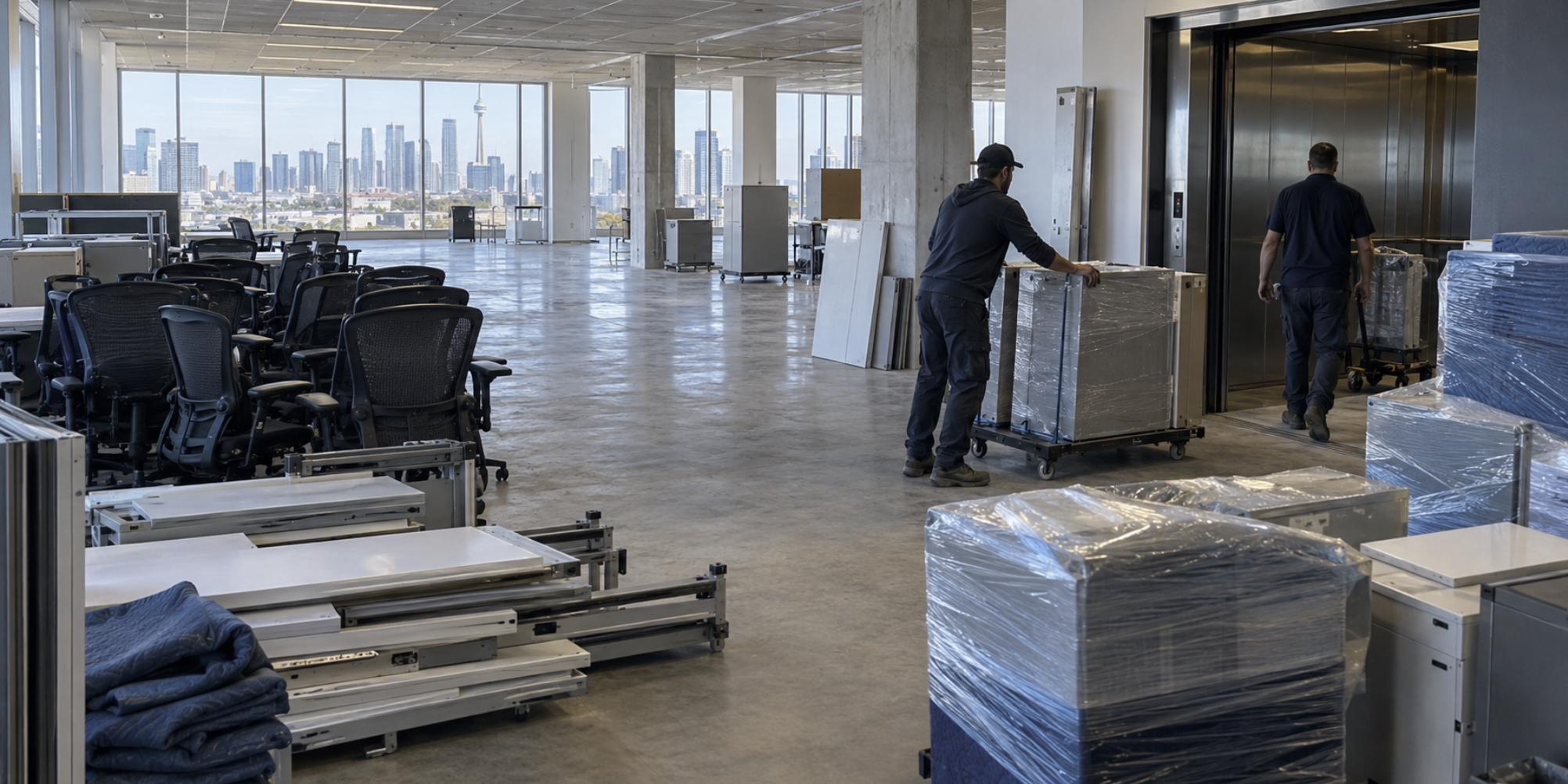
Toronto office projects often depend heavily on freight-elevator and loading-dock windows, which is why MGT includes building access and scheduling within its local Toronto office liquidation process.
10. Plan Furniture Disassembly
Large desks, cubicles, conference tables, shelving, and storage systems may need to be dismantled before they can leave the space.
Determine which items can move intact and which need to be broken down.
Plan the removal path at the same time. The Canadian Centre for Occupational Health and Safety recommends checking the travel path for obstructions before handling loads and using appropriate material-handling methods. CCOHS guidance on manual material handling
MGT's office furniture removal services include dismantling and transport as part of the clearance scope.
11. Disconnect Equipment and Remove Remaining Fixtures
Once active operations have ended, address equipment and fixtures that cannot simply be carried out.
Depending on the office, this can include:
- AV equipment
- server and network equipment
- wall-mounted displays
- appliances
- cabling
- specialty fixtures
- remaining office equipment
Only remove building components that are actually included in the agreed scope. Lease handback requirements differ, so confirm landlord expectations before taking out anything attached to the premises.
12. Complete Required Reinstatement Work
After furniture and equipment are gone, inspect what has been exposed.
There may be wall damage, floor issues, abandoned cabling, mounting points, or other conditions that need attention before turnover.
Do not assume every office must be restored to an identical base-building condition. The required work is determined by your particular lease and agreed handback terms.
Resolve this scope early enough that trades can work after major removals but before the final cleaning.
13. Clear Debris and Complete the Final Clean
A physically empty office may still not be ready for handback.
Remove packaging, loose hardware, abandoned supplies, garbage, and debris from disassembly. Then complete the cleaning standard required for the space.
MGT's decommissioning process ends with the office cleared and organized, while its FAQ describes typical closeout as including final removal and a broom-clean finish. Office furniture decommissioning.
Do not schedule the final clean before heavy removal work is complete.
14. Conduct a Final Walkthrough
Walk every area before the landlord inspection.
Check:
- private offices
- meeting rooms
- storage rooms
- kitchens
- closets
- server rooms
- reception areas
- shared spaces included in your tenancy
Compare the condition against the original handback list.
This is your opportunity to find a forgotten cabinet, cable bundle, wall-mounted item, or room that was missed before the landlord does.
15. Complete the Handback and Keep the Records
Once the premises meet the agreed condition, complete the final landlord or property-manager walkthrough.
Return keys, access cards, parking passes, or other building property as required and document completion.
Keep relevant project records together, including:
- final inventory
- resale records
- donation confirmations
- recycling or e-waste documentation
- invoices
- completion photographs
- landlord sign-off or correspondence
For projects using several disposition routes, a final record helps show what happened to the assets after they left the office.
Common Office Decommissioning Mistakes to Avoid
Most lease-handback problems come from sequencing rather than the physical difficulty of moving furniture.
Avoid:
- waiting until the final week to inventory the office
- assuming everything without an internal use is waste
- forgetting IT and data-bearing equipment
- booking crews before securing elevator or dock access
- removing equipment employees still need
- assuming the lease requires a particular reinstatement standard without checking
- treating the sale of furniture as separate from the removal plan
- leaving unsold assets without a fallback destination
- scheduling cleaning before the major removal work is finished
A good decommissioning plan answers what leaves, where it goes, who removes it, and when each stage must be completed.
Frequently Asked Questions About Office Decommissioning
How early should commercial office decommissioning begin?
Begin planning as soon as the exit date is known. Larger offices, multi-floor projects, complicated building access, IT requirements, and furniture liquidation all require more lead time than a straightforward small-office cleanout.
What is included in office decommissioning?
The scope can include inventory assessment, furniture disassembly, equipment removal, IT and electronics handling, asset liquidation, recycling, debris removal, and final clearance. The exact scope should be matched to the lease and landlord requirements.
Can office furniture be sold during a decommission?
Yes. Furniture with resale demand can be evaluated through office furniture liquidation before removal. Recovery may offset part of the overall project cost.
Does the office need to be returned to its original condition?
Not automatically. The handback standard depends on the lease and any agreements with the landlord. Confirm the required condition before authorizing reinstatement work.
Quick Recap
- Start with the lease: The handback requirements determine the scope.
- Inventory before removing: Separate retained, resale, donation, recycling, and disposal assets.
- Handle IT separately: Protect information before devices leave the office.
- Book building access early: Elevators, docks, security, and working-hour restrictions can control the schedule.
- Sequence the work: Removal, reinstatement, cleaning, and final inspection need to happen in the right order.
- Document completion: Keep asset and handback records together after the project closes.
Planning an Office Lease Handback?
A clean office handback depends on getting the asset decisions and physical removal plan in place before the deadline.
Michael's Global Trading provides office furniture decommissioning across Toronto and Canada, including inventory assessment, furniture and equipment removal, asset recovery, electronics handling, recycling, and final clearance.
Send us photographs or an inventory, your office location, and the required handback date. We'll assess the space and build the decommissioning plan around your building requirements and timeline.
Recommended Readings
Office Furniture Disposal Costs Exposed: Landfill Fees, Labour, and Lost Value
The Hidden Costs of Delaying Office Furniture Removal Before Lease Expiry
Recommended readings:

Blogs & News
Get started on
your journey with us.