Liquid assets are cash or assets that a business can convert into cash relatively quickly without taking a significant loss in value. Cash itself is the most liquid asset because it is already available to pay expenses, suppliers, employees, or other short-term obligations.
Other business assets fall at different points on the liquidity spectrum. Bank balances and marketable securities can generally be converted into usable cash quickly. Accounts receivable and inventory may also be considered current assets, but they usually require more time before they become cash. Furniture, machinery, real estate, and other long-term assets are typically much less liquid because a buyer must first be found.
Understanding that difference is important when evaluating a company's ability to pay its short-term obligations or deciding whether unused business assets should be sold through commercial asset liquidation.
What Does Liquidity Mean in Business?
Liquidity describes how easily a business can access cash.
BDC defines liquidity as a company's ability to convert assets to cash, or otherwise access cash, so it can meet short-term obligations. Assets that can be converted more quickly are considered more liquid. BDC's definition of business liquidity BDC.ca
Two questions help determine how liquid an asset is:
- How quickly can it be converted into cash?
- How much value would be lost if it had to be sold quickly?
An asset that can be sold tomorrow near its current market value is highly liquid.
An asset that could take several months to sell, or would need to be deeply discounted for an immediate sale, is much less liquid.
Examples of Liquid Assets
Business assets exist on a spectrum rather than fitting perfectly into only two categories.
Cash
Cash is the most liquid asset because no sale or conversion is required.
That includes:
- cash on hand
- funds in operating bank accounts
- accessible business savings
BDC describes cash as the asset with the highest liquidity and notes that balance sheets list assets in decreasing order of liquidity. BDC's guide to cash BDC.ca
Marketable Securities
Short-term investments that can be sold through an established market can also be highly liquid.
These may include certain:
- publicly traded securities
- treasury bills
- short-term investments
BDC includes investments that can be realized quickly among current assets.
Accounts Receivable
Money customers owe the business is generally recorded as a current asset.
However, a receivable is not as liquid as cash because the customer still needs to pay it.
A company may have significant accounts receivable on its balance sheet but still experience a cash shortage if those invoices are collected slowly.
Inventory
Inventory is also generally classified as a current asset because businesses expect to sell it through their normal operating cycle.
But inventory can vary significantly in liquidity.
High-demand merchandise that sells every day may be relatively easy to convert into cash. Overstock, obsolete inventory, or specialized products may take much longer.
Statistics Canada specifically cautions that a business can appear to have substantial current assets while a large portion consists of inventory that may not be easily converted into cash. Statistics Canada guidance on liquidity ratios Statistics Canada
Liquid Assets vs. Non-Liquid Assets
The original distinction between liquid and non-liquid assets remains useful, but the difference is really about speed and ease of conversion.
Liquid Assets
Liquid assets can generally be converted into cash relatively quickly.
Examples include:
- cash
- bank balances
- certain marketable investments
- some accounts receivable
Less-Liquid or Non-Liquid Assets
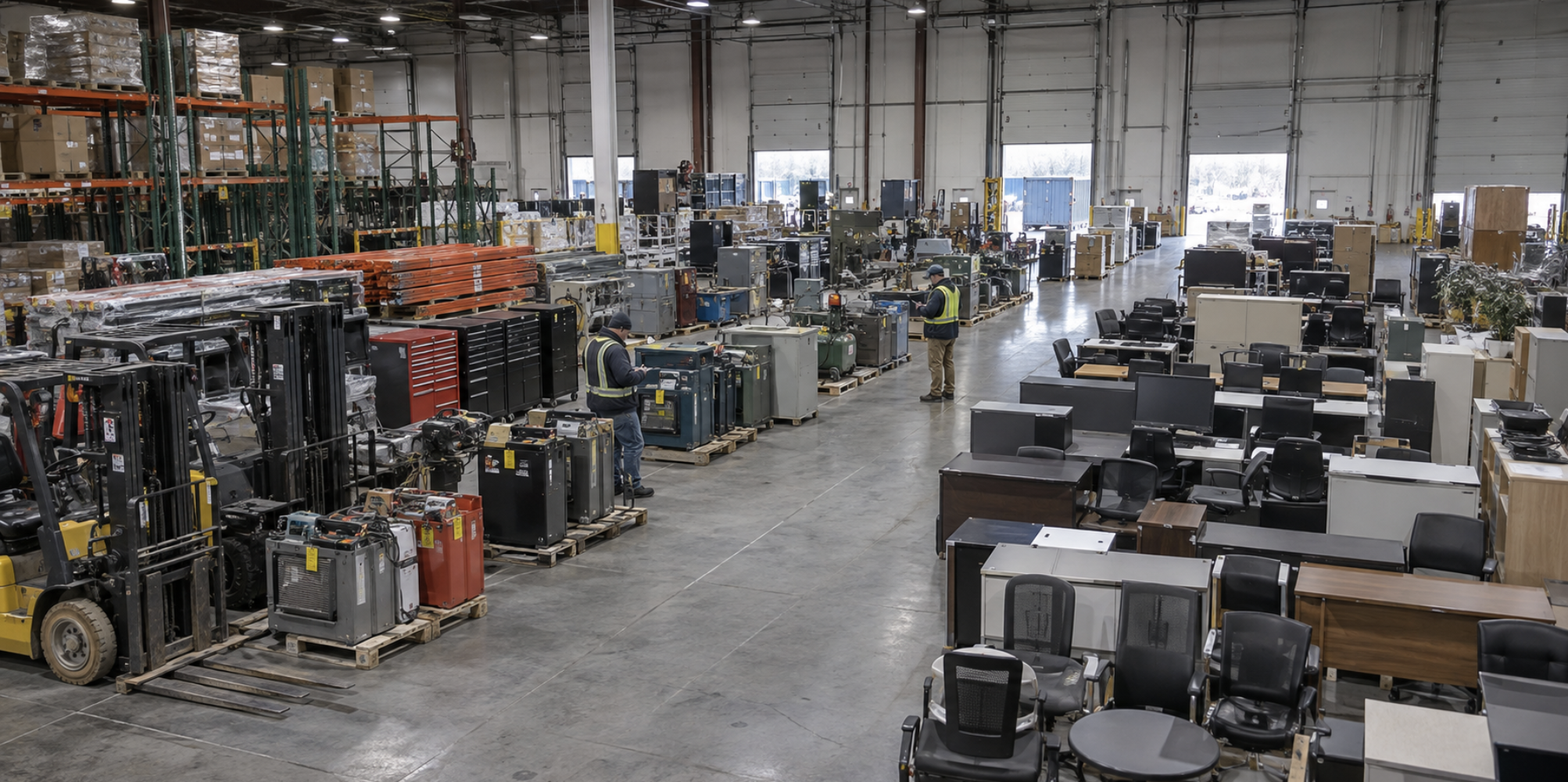
Long-term physical assets typically require a more deliberate sale process.
Examples include:
- commercial real estate
- office furniture
- machinery
- vehicles
- warehouse racking
- specialized equipment
BDC classifies furniture, equipment, buildings, and similar resources as long-term assets. These assets may hold significant value but can take months or longer to convert into cash depending on market conditions. BDC.ca
That does not mean a non-liquid asset has little value.
A warehouse full of machinery could be worth hundreds of thousands of dollars while still being much less liquid than $100,000 held in a bank account.
Why Liquid Assets Matter to a Business
Liquidity determines whether a company can meet obligations without disrupting normal operations.
Businesses need accessible cash for expenses such as:
- payroll
- rent
- suppliers
- taxes
- debt payments
- unexpected repairs
- short-term operating costs
Strong liquidity can also give a company greater flexibility when an opportunity appears.
BDC notes that lenders examine liquidity when evaluating a business because limited access to working capital can restrict a company's ability to invest and grow.
The goal is not necessarily to hold every asset in cash.
Long-term assets such as equipment and property may be essential to producing revenue. The business needs an appropriate balance between assets that support operations and resources that can cover short-term obligations.
How Businesses Measure Liquidity
Financial statements use several ratios to help evaluate how comfortably a business can meet current obligations.
Current Ratio
The current ratio compares current assets with current liabilities:
Current ratio = current assets ÷ current liabilities
BDC describes the current ratio, also called the working capital ratio, as a common measure of whether a business has enough current assets to meet short-term obligations.
A business should still look at what those current assets actually contain.
A company with large amounts of slow-moving inventory may have a reasonable current ratio while having less immediately accessible cash than the number suggests.
Quick Ratio
The quick ratio takes a stricter approach by focusing on assets that can be converted into cash more readily.
Inventory and some other less-liquid current assets are generally excluded.
That can provide a clearer view of the company's immediate liquidity when a large portion of its current assets is tied up in stock.
There is no single ideal liquidity ratio for every business. Appropriate levels depend on the company's industry, cash cycle, obligations, access to financing, and operating model. BDC specifically notes that there is no universal liquidity target. BDC.ca
Can Business Equipment Become a Source of Cash?
Yes, but that does not make the equipment a highly liquid asset while the business still owns it.
Surplus furniture, technology, warehouse equipment, fixtures, machinery, and inventory can be liquidated, meaning they are sold and converted into cash.
The amount and speed of recovery depend on:
- condition
- age
- manufacturer and model
- quantity
- buyer demand
- location
- available selling time
- dismantling and transportation requirements
This distinction is important.
A liquid asset is already easy to convert into cash. Asset liquidation is the process used to turn a less-liquid asset into cash.
MGT's commercial asset liquidation services begin with an asset review to determine what can be resold, removed, or recycled, followed by a project plan based on the inventory and timeline.
When Should a Business Consider Liquidating Physical Assets?
Physical assets should generally be assessed for liquidation when they no longer justify the capital or space tied up in them.
Common situations include:
- office downsizing
- relocation
- warehouse consolidation
- equipment upgrades
- retail closures
- excess or discontinued inventory
- mergers or restructuring
- complete business closure
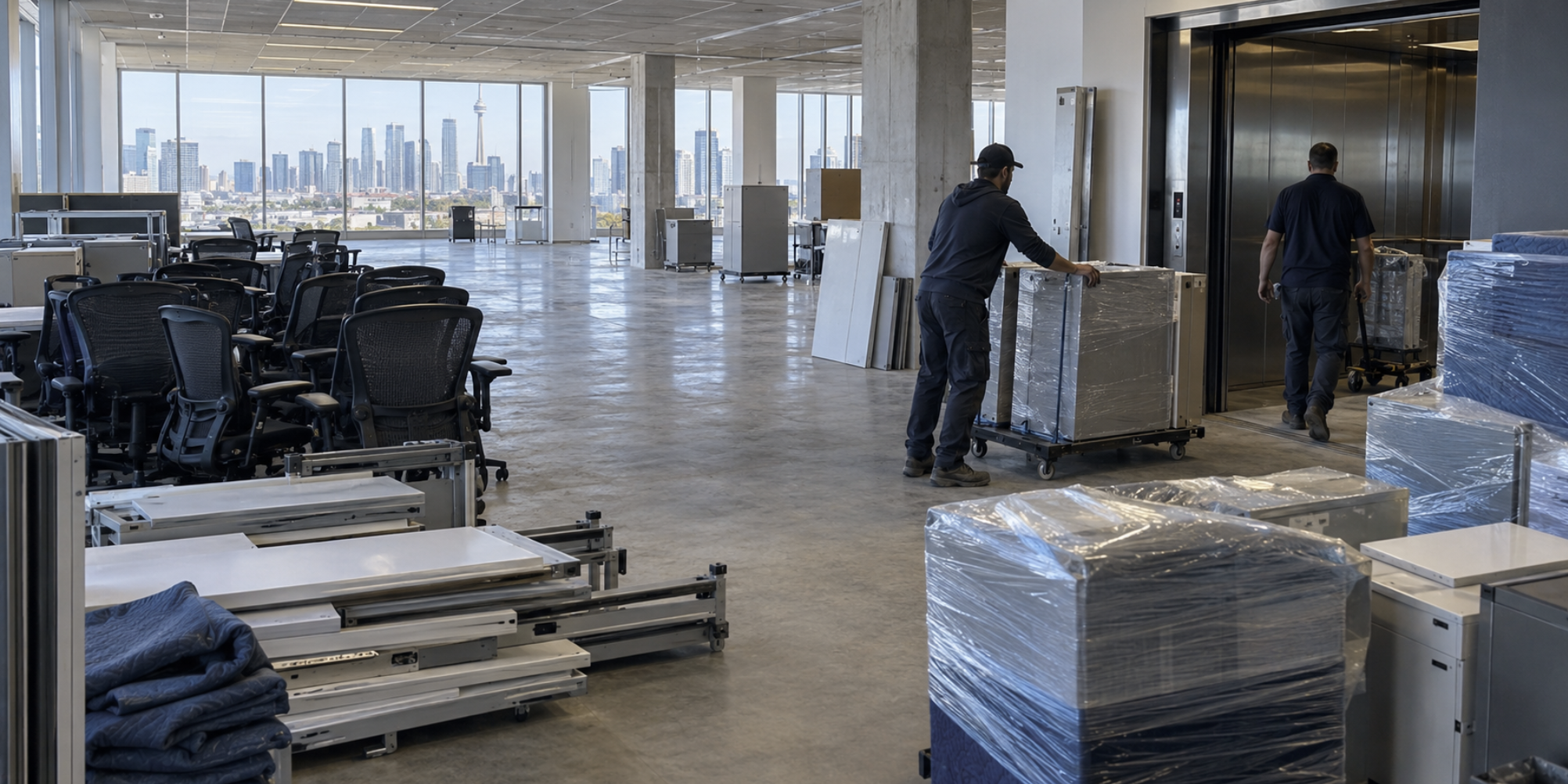
For example, a business moving into a smaller office may have 200 workstations but only need 80 in the new location.
The remaining furniture is a long-term physical asset until it is sold. Through office furniture liquidation, the business may be able to convert some of that surplus into cash rather than paying only for removal.
The same principle applies to warehouse and technology assets.
Liquidation Value Is Not the Same as Book Value
Businesses should also distinguish between what an asset is recorded at and what it can actually recover in a sale.
Equipment may have:
- an original purchase price
- an accounting or book value
- a current market value
- a liquidation value
Those figures can be very different.
Market demand determines what another buyer is prepared to pay. The amount recoverable also changes when the selling window becomes shorter.
That is why an asset assessment should happen before management assumes how much cash a liquidation will generate.
MGT's commercial liquidation process uses inventory assessment and valuation before selecting the appropriate sales strategy
Frequently Asked Questions About Liquid Assets
What is the most liquid asset?
Cash is the most liquid asset because it can be used immediately without being sold or converted into another form.
Is inventory a liquid asset?
Inventory is generally considered a current asset, but it is less liquid than cash or many marketable securities. How quickly it can become cash depends on buyer demand, pricing, and how quickly the business can sell it.
Is equipment a liquid asset?
Generally, no. Business equipment is usually a long-term asset because finding a buyer and completing a sale takes time. It can still have substantial liquidation value.
Is real estate a liquid asset?
Real estate is generally considered illiquid because selling it typically takes considerably longer than accessing cash or selling a marketable financial asset.
Does a business need six months of liquid assets?
There is no universal six-month rule for every company. Appropriate liquidity depends on the business's operating cycle, expenses, industry, financing access, and risk profile. BDC specifically advises businesses to monitor liquidity over time rather than relying on one universal target.
Quick Recap
- Liquid assets can be converted into cash quickly without significant loss in value.
- Cash is the most liquid asset.
- Current assets vary in liquidity: Accounts receivable and inventory generally take longer to convert than cash.
- Furniture, equipment, and real estate are less liquid: They can have substantial value but require a buyer and more time to sell.
- Liquidity helps businesses meet short-term obligations and maintain financial flexibility.
- Asset liquidation converts surplus physical assets into cash: It does not make them liquid before the sale occurs.
- Market value matters: Book value and original purchase price do not determine how much a surplus asset will recover.
Have Business Assets You Need to Convert Into Cash?
Surplus equipment may not be a liquid asset today, but the right resale strategy can turn unused property into recoverable capital.
Michael's Global Trading provides commercial asset liquidation across Toronto and Canada for businesses clearing office furniture, technology, warehouse equipment, retail fixtures, inventory, and other commercial assets.
Send us your inventory, photographs, location, and required clearance date. We'll assess the assets, identify their resale potential, and develop a liquidation plan around the available market and timeline.
Recommended Readings
What Does a Commercial Liquidation Company Actually Do? A Process Breakdown