
How to Use Social Media to Showcase Your Liquidated Commercial Assets
Customers increasingly want proof that sustainability claims are real. Turn behind-the-scenes operations into trust-building content.
Customers increasingly want proof that sustainability claims are real. One of the most powerful ways to show impact is by telling the “second life” story of your assets after a move, downsizing, or closure. When done well, sustainable office decommissioning becomes visible, credible, and shareable, turning behind-the-scenes operations into trust-building content.
- Transparency builds credibility with customers and partners
- Real outcomes resonate more than generic sustainability claims
Why the “Second Life” Story Matters
Sustainability storytelling works best when it is concrete. Instead of abstract promises, audiences respond to visuals and outcomes they can see. According to Nielsen, 66% of global consumers are willing to pay more for products and services from companies committed to positive social and environmental impact (Nielsen). Showing how desks, chairs, and technology are reused reinforces that commitment in a way annual reports cannot.
- Visual proof strengthens sustainability messaging
- Reuse stories help differentiate your brand authentically
Social Media as Proof, Not Promotion
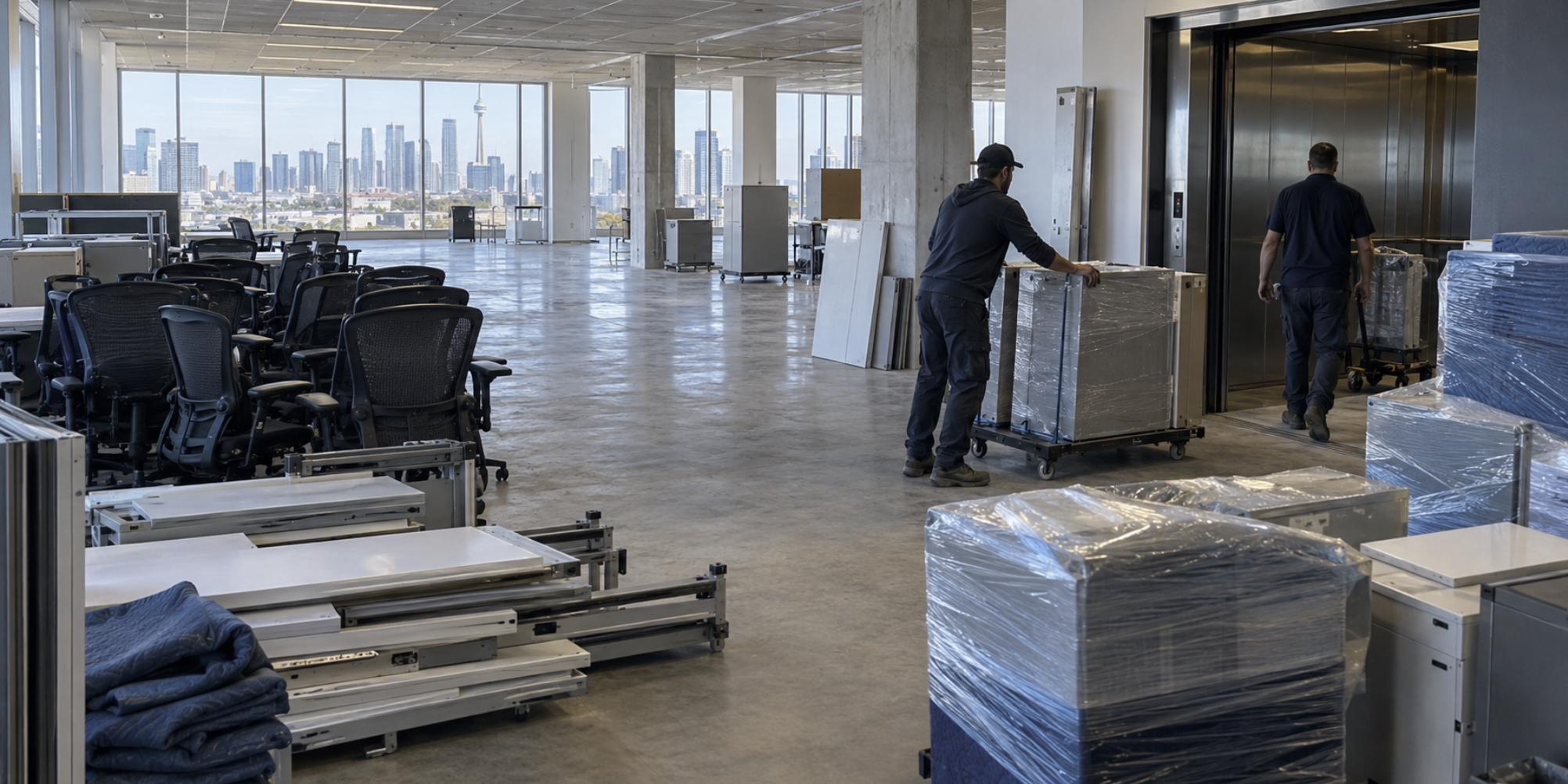
Platforms like LinkedIn and Instagram are ideal for documenting sustainable office decommissioning in action. Short posts showing furniture being reused, technology redeployed, or materials recycled perform better than polished marketing slogans. A simple photo of desks in a new space or laptops heading to reuse channels carries more credibility than a stock sustainability graphic.
- Real images outperform generic marketing content
- Progress updates make sustainability feel tangible
What to Show in a “Second Life” Campaign
Not every post needs to be dramatic. Consistency matters more than scale. Effective content often includes before-and-after visuals, short captions explaining what happened to the assets, and clear outcomes. The EPA reports that furniture and furnishings generated about 12.1 million tons of waste in 2018, with most still landfilled (EPA). Showing diversion from landfill directly addresses this problem.
- Before-and-after visuals of workstations or equipment
- Clear explanations of reuse, resale, or recycling outcomes

Linking Sustainability to Business Values
Sharing repurposing stories is not just about the environment. It reinforces operational discipline and smart asset management. Customers and enterprise partners increasingly look for evidence of ESG alignment when choosing vendors. Demonstrating sustainable office decommissioning helps show that sustainability is embedded in operations, not treated as an afterthought.
- ESG-aligned storytelling supports procurement and RFP processes
- Operational sustainability signals long-term responsibility
How Michael’s Global Trading Supports the Story
Behind every credible “second life” post is a structured process. Michael’s Global Trading supports companies by coordinating furniture removal, technology liquidation, and responsible recycling in one workflow. That structure makes it easy to document outcomes and share accurate stories without guesswork.
Michael’s also provides clear reporting and documentation that businesses can confidently reference in posts, presentations, and ESG disclosures, ensuring the story remains factual and defensible.
- Centralized coordination makes outcomes easier to track and share
- Documentation supports credible sustainability communication
Turning Operations Into Ongoing Content
One of the biggest missed opportunities is treating decommissioning as a one-time event. Instead, organizations can create a short content series that follows assets through their transition. According to Sprout Social, authentic, values-based content increases engagement and trust, especially in B2B channels (Sprout Social).
- Ongoing updates keep audiences engaged over time
- Reuse stories humanize operational decisions

Quick Recap
- Customers respond to real, visible sustainability outcomes
- Social media is a powerful channel for “second life” storytelling
- Sustainable office decommissioning provides authentic content opportunities
- Showing reuse directly addresses furniture waste challenges (EPA)
- Michael’s Global Trading enables structured, document-backed stories
Let Your Assets Tell the Story
Sustainability does not have to be abstract. By showing how assets are reused instead of discarded, businesses turn sustainable office decommissioning into a narrative customers can see and trust. With the right partner and a consistent storytelling approach, the journey from office exit to second life becomes more than an operational task. It becomes proof of responsibility in action.
Recommended readings:

Blogs & News


Get started on
your journey with us.