
Office Furniture Disposal in Canada: Regulations, Costs, and Smarter Alternatives
Navigating office furniture disposal regulations in Canada? Learn provincial rules, real costs, and why liquidation beats disposal. Michaels Global Trading helps Canadian businesses recover value while staying compliant. Get your free cost comparison today.
Most Canadian businesses treat old desks, chairs, and filing cabinets as a simple logistics problem: call someone, have it hauled away, move on. That assumption is becoming an expensive one. Office furniture disposal in Canada sits inside a growing web of provincial regulations and commercial waste obligations that place real legal responsibility on the businesses generating that waste.
Why Office Furniture Disposal Is Regulated in Canada
Canada does not manage commercial waste through a single national framework. Each province sets its own rules, and those rules have been tightening as governments push toward circular economy goals. The underlying direction across most provinces is consistent: keep reusable and recyclable materials out of landfills, and place more of the responsibility for that outcome on businesses.
A 2022 report by the Association of Municipalities of Ontario specifically identified furniture as a material that should be diverted from disposal sites under an extended producer responsibility approach. (AMO) In BC, the province already has the most extensive list of materials covered by extended producer responsibility in North America, and continues to look for ways to prevent waste from commercial, industrial, and institutional sources. (Recycling Council of British Columbia)
- Check whether your province has updated its commercial waste bylaws recently. Ontario, BC, and Quebec have all made changes in the last few years that affect how businesses handle bulky commercial items.
- Contact your regional waste authority before scheduling any removal to confirm what documentation may be required for commercial furniture disposal in your municipality.

What Provincial Regulations Actually Require
Ontario's framework is built around the Resource Recovery and Circular Economy Act, 2016, administered by the Resource Productivity and Recovery Authority. The province's strategy frames end-of-life materials as resources rather than waste, with a goal of increasing reuse and recycling across all sectors, including the industrial, commercial, and institutional sectors. (Ontario)
In BC, the Extended Producer Responsibility 5-Year Action Plan (2021 to 2026) includes developing policy options to prevent waste from the non-residential, industrial, commercial, and institutional sectors (Province of British Columbia). Quebec's Environment Quality Act takes a similar position, with the province's Residual Materials Management Policy establishing that reducing, reusing, and recycling are the preferred hierarchy before any disposal option is considered.
- If your business operates across multiple provinces, treat BC's framework as a signal for where other provinces are heading and plan accordingly.
- Build a disposal record that documents how your business evaluated reuse and recycling options before choosing disposal. That paper trail matters as provincial oversight of commercial waste expands.
What Office Furniture Disposal Actually Costs
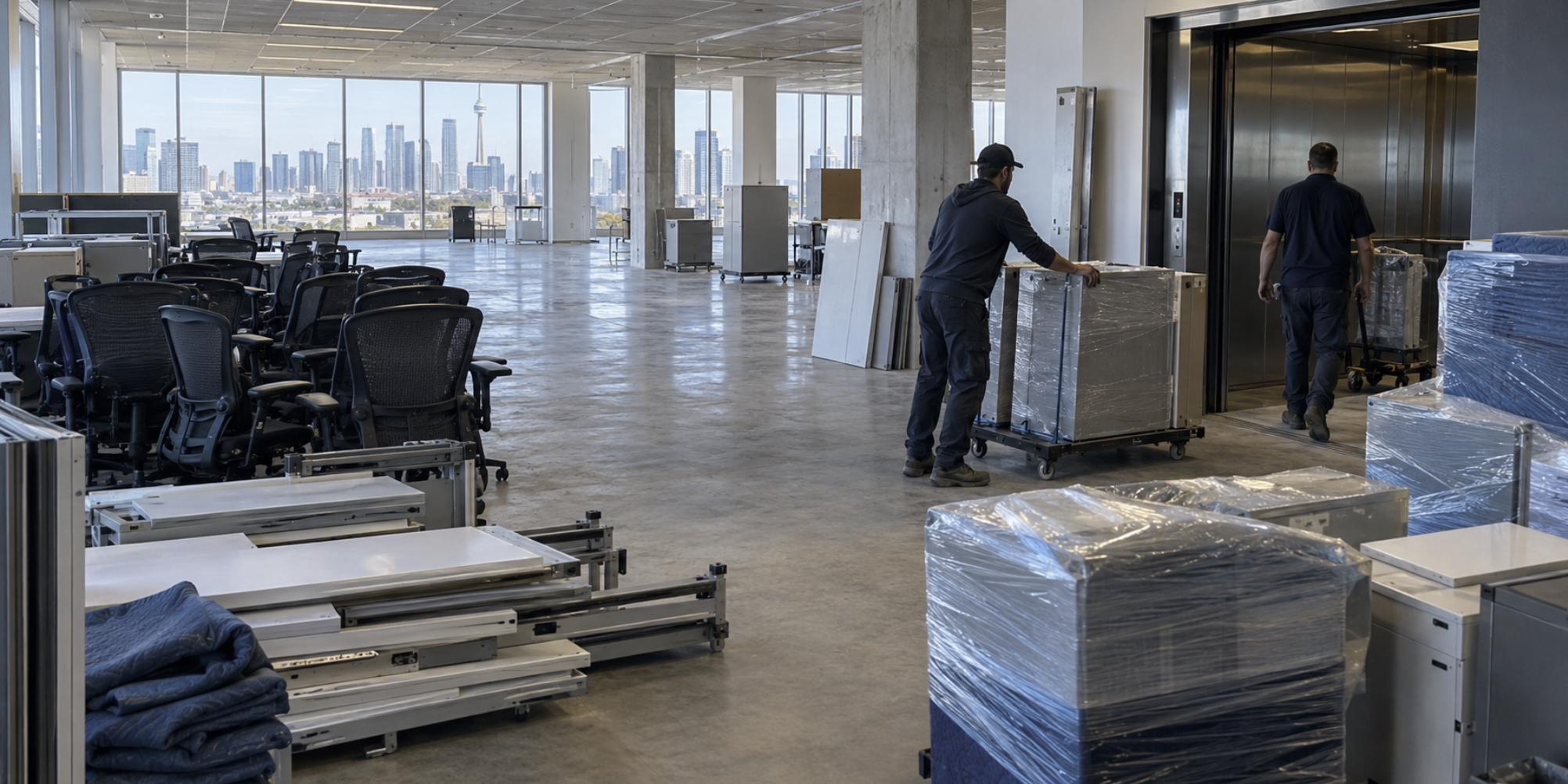
The direct cost of commercial furniture removal is higher than most businesses expect. Office furniture disposal ranges from $200 to over $3,000 depending on volume, from a small number of desks and chairs to a full floor of cubicles. For businesses clearing multiple floors, the total bill climbs quickly before tipping fees are even factored in.
What that number also does not capture is the opportunity cost of items that still hold recoverable value. Liquidation presents a direct revenue opportunity, allowing businesses to sell furniture to interested buyers rather than discarding it, with proceeds able to offset the cost of new purchases or other business expenses.
- Get a liquidation assessment before committing to a disposal quote. Understanding what your furniture is worth on the secondary market changes the financial picture entirely.
- Ask disposal vendors to itemize quotes by labour, hauling, and tipping fees separately so you can make a genuine comparison against liquidation alternatives.
Liquidation: The Smarter Alternative to Disposal
When furniture is resold through a professional liquidation channel, it stays out of the waste stream, generates revenue instead of cost, and supports the diversion expectations that provincial regulators are building into commercial waste policy. It is a better outcome on every measure that matters.
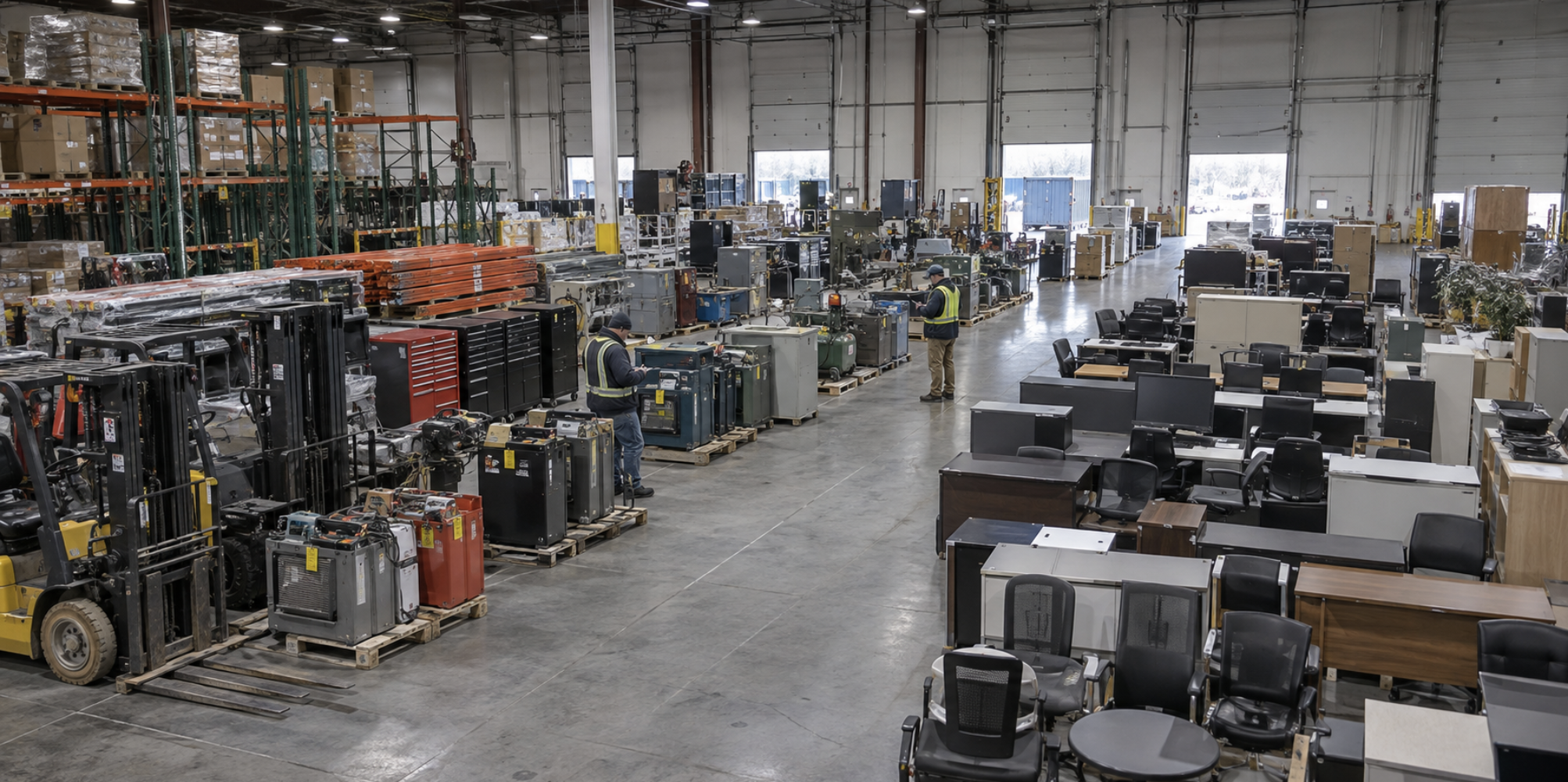
Michaels Global Trading provides full-service office furniture liquidation for businesses across Toronto and throughout Canada, with customized strategies matched to each client's asset volume and timeframe, focusing on fast turnaround, transparent pricing, and sustainable results. Their strong relationships with commercial buyers, donation partners, and recycling facilities allow them to maximize returns while minimizing environmental waste, with local service capabilities and national reach.
- Bring in a liquidation partner early in your office transition. Getting Michaels Global Trading involved before lease deadlines create pressure gives their team time to maximize asset recovery.
- Do not assume older or worn furniture has no value. A professional assessment regularly identifies resale or donation potential in items businesses were ready to write off.

What Eco-Friendly Disposal Actually Means
"Eco-friendly disposal" is used loosely in this industry. Genuine diversion means documented resale, donation, or recycling. It is not disposal with better marketing language attached to it.
Michaels Global Trading's decommissioning services handle everything from inventory assessments to sustainable disposal, delivering a clean, compliant, and cost-effective office exit for businesses vacating, relocating, or restructuring. Their eco-friendly office furniture disposal service prioritizes resale and reuse before any end-of-life handling, giving clients verifiable diversion outcomes rather than a hauling receipt.
- Ask any vendor where furniture goes after removal. A credible partner answers this clearly and specifically.
- If your business has ESG commitments or sustainability reporting obligations, confirm your vendor can supply the documentation your reporting requires.
Work With a Partner Who Gets It Right
Office furniture disposal in Canada is not a simple logistics call. Between tightening provincial regulations, the real cost of disposal at scale, and the value professional liquidation can recover, the businesses that come out ahead are the ones that make a smarter decision before the default disposal call goes through.
Founded in 2013, Michaels Global Trading has built its reputation as a trusted industry leader in commercial liquidation, serving businesses across all industries with office furniture liquidation, electronic liquidation, and surplus inventory solutions.
Contact Michaels Global Trading today for a free disposal versus liquidation cost comparison. Find out what your office furniture is actually worth before you pay to get rid of it.
Recommended readings:
Blogs & News

Get started on
your journey with us.