To tell if a liquidation sale is a good deal, compare the item’s total cost with current prices elsewhere, inspect its condition and understand the purchase terms. A large percentage discount does not necessarily mean you are saving money.
Liquidation sales can offer useful bargains, but the right purchase depends on more than the price tag. Missing accessories, delivery costs or limited return options may make a discounted item less attractive than an alternative from another retailer.
These four tips explain what to check before buying at a liquidation sale.
Tip 1: Check Current Retail Prices Before You Go
Start with a list of what you need and what you are willing to spend. Look up current prices before visiting the sale so you have a realistic comparison.
Compare the exact item. Match the model number, size, specifications and included accessories wherever possible. A different model or an older version may have a lower regular selling price.
Also check whether the alternatives are new, used, refurbished or open-box. A damaged display unit should not be assessed as though it offers the same value as an unopened product with confirmed warranty coverage.
Look beyond the advertised discount. The Competition Bureau’s guidance on ordinary selling prices explains that businesses cannot invent a higher regular price to make a discount look more attractive. For your own decision, compare the amount you would actually pay with current offers elsewhere.
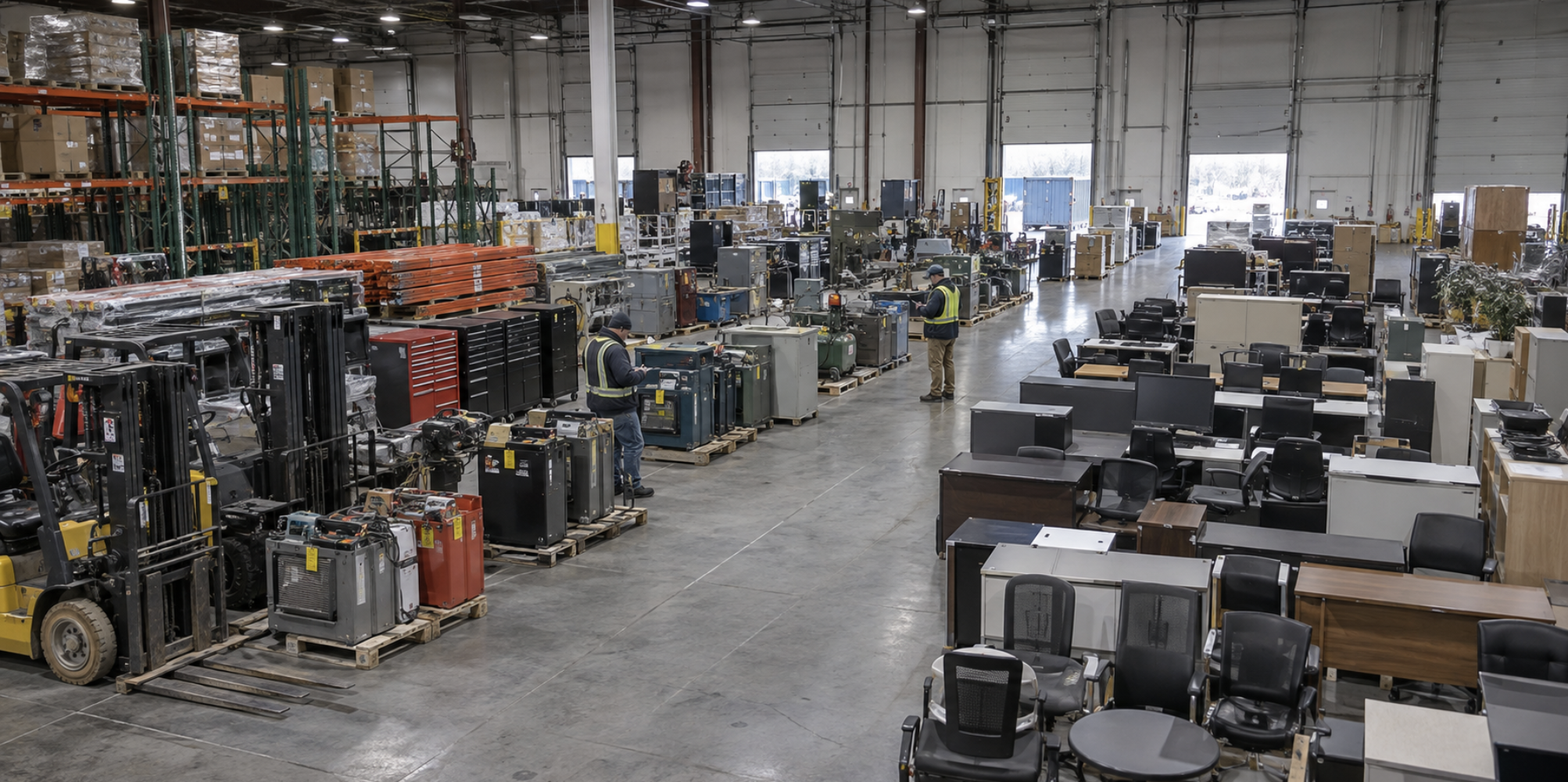
Liquidation merchandise can include different kinds of stock, so avoid assuming everything is new or being sold because a business is closing. MGT’s Retail Liquidation Facts provides background on the goods and sales channels involved.
Tip 2: Compare the Total Cost Before Paying
Use your phone to check prices again while shopping. Retailer websites or a price-comparison tool can help, but confirm that the result matches the product in front of you.
Check availability as well as price. An online listing is a useful alternative only if the item is available and can be delivered or collected when you need it.
Before deciding, account for:
- Delivery or collection: Include any charges or transport you need to arrange.
- Missing accessories: Check the price and availability of essential cables, fittings or other parts.
- Repairs: Do not assume a fault will be inexpensive to fix.
- Applicable taxes and fees: Compare both options on the same basis.
For example, a $120 item needing a $30 accessory and $40 delivery costs $190 before applicable taxes. A complete alternative at $180 with delivery included could be the better purchase. These figures illustrate the comparison, not typical liquidation prices.
If you are bidding rather than buying at a fixed price, check the auction terms for buyer’s premiums, collection deadlines and other charges. The Liquidation Auctions in Canada guide explains how that process differs from a store sale.
Balance price against availability. Prices may fall as a sale progresses, but the item you want could sell first. There is no universal best day or discount percentage. Buy when the total cost and conditions work for you, rather than assuming the final days will offer the best choice.

Tip 3: Inspect the Item and Confirm the Terms
Inspection matters when buying discounted goods, especially if returns are restricted. Ask staff before opening packaging or testing an item.
Check condition and completeness. Look for visible damage, missing components and signs of previous use. Confirm that the contents match the box and description. For furniture, check dimensions and fittings. For electronics, ask whether testing is permitted and whether required accessories are included.
If you cannot inspect or test something, consider whether the saving justifies that uncertainty. Walking away can be the better decision when an essential feature or condition cannot be confirmed.
Read the return policy. Do not assume every liquidation purchase follows the same rules. Ask whether the seller offers refunds, exchanges or store credit, and get any relevant promise in writing.
In Ontario, there is no general right to return or exchange goods simply because you change your mind. However, remedies can exist in circumstances such as misrepresentation. A final-sale label does not necessarily remove every legal right. See Ontario’s returns, exchanges and warranties guidance; requirements elsewhere depend on the applicable provincial rules and transaction.
Confirm warranty coverage separately. Ask who provides the warranty, whether it covers that specific item and what proof of purchase is required. Do not assume a store warranty and a manufacturer’s warranty are interchangeable, particularly when the seller is closing.
Tip 4: Keep Records and Understand Payment Protection
Before paying, confirm the seller’s identity, the amount charged and any collection or delivery arrangements. If you plan to use a gift card or store credit, ask whether it is currently accepted and whether restrictions apply.
Keep useful evidence. Save the receipt, product description, written terms and any messages about condition or delivery. These records help establish what was promised if a problem arises.
Credit cards may provide a way to dispute certain transactions, but they do not guarantee a refund whenever an item fails or disappoints you. Do not assume a card payment makes a purchase risk-free.
According to OBSI’s guidance on disputed credit-card charges, consumers generally need to try to resolve a purchase problem with the merchant first. If that does not work, contact the card issuer promptly. Procedures, deadlines and outcomes depend on the circumstances and applicable rules.
For a cash purchase, a credit-card dispute process would not be available. However, the seller’s obligations and any applicable consumer rights still need to be considered. Whatever payment method you use, do not let an assumed protection replace checking the product and terms.

Buying Carefully or Planning a Business Liquidation?
A worthwhile liquidation purchase meets your needs at a competitive total cost, with a condition and set of terms you understand.
If you are a business owner planning a closure or surplus-asset sale, contact Michaels Global Trading to discuss your assets, location and timing.