
Why Choose Professional Liquidators?
Liquidation, generally, refers to the process of selling off a company’s assets in order to generate revenue. In most cases, the company’s inventory is sold at a large discount in order to maximize the chances that they sell all of their inventory and get the most money possible.
Why Choose Professional Liquidators?
Professional liquidators help businesses turn surplus inventory and commercial assets into recoverable value while managing the work required to sell and remove them. For retailers, that can mean clearing excess merchandise, closing a location, downsizing operations, or dealing with assets that are tying up valuable space and working capital.
The advantage is not simply having someone sell inventory at a discount. A professional liquidator can assess what the business has, identify appropriate buyers, develop a sale strategy around the available timeline, and coordinate the physical removal of assets that need to leave.
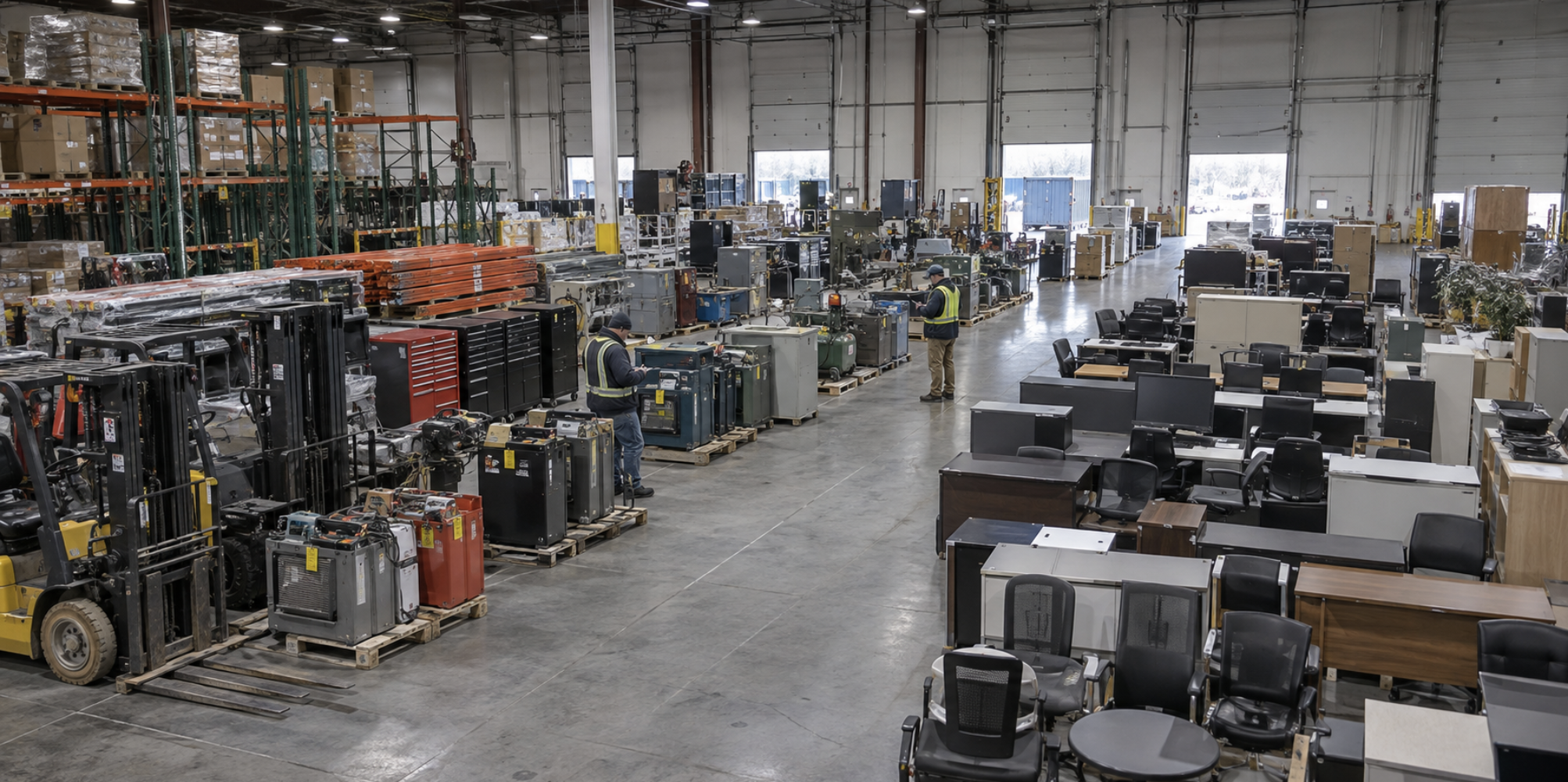
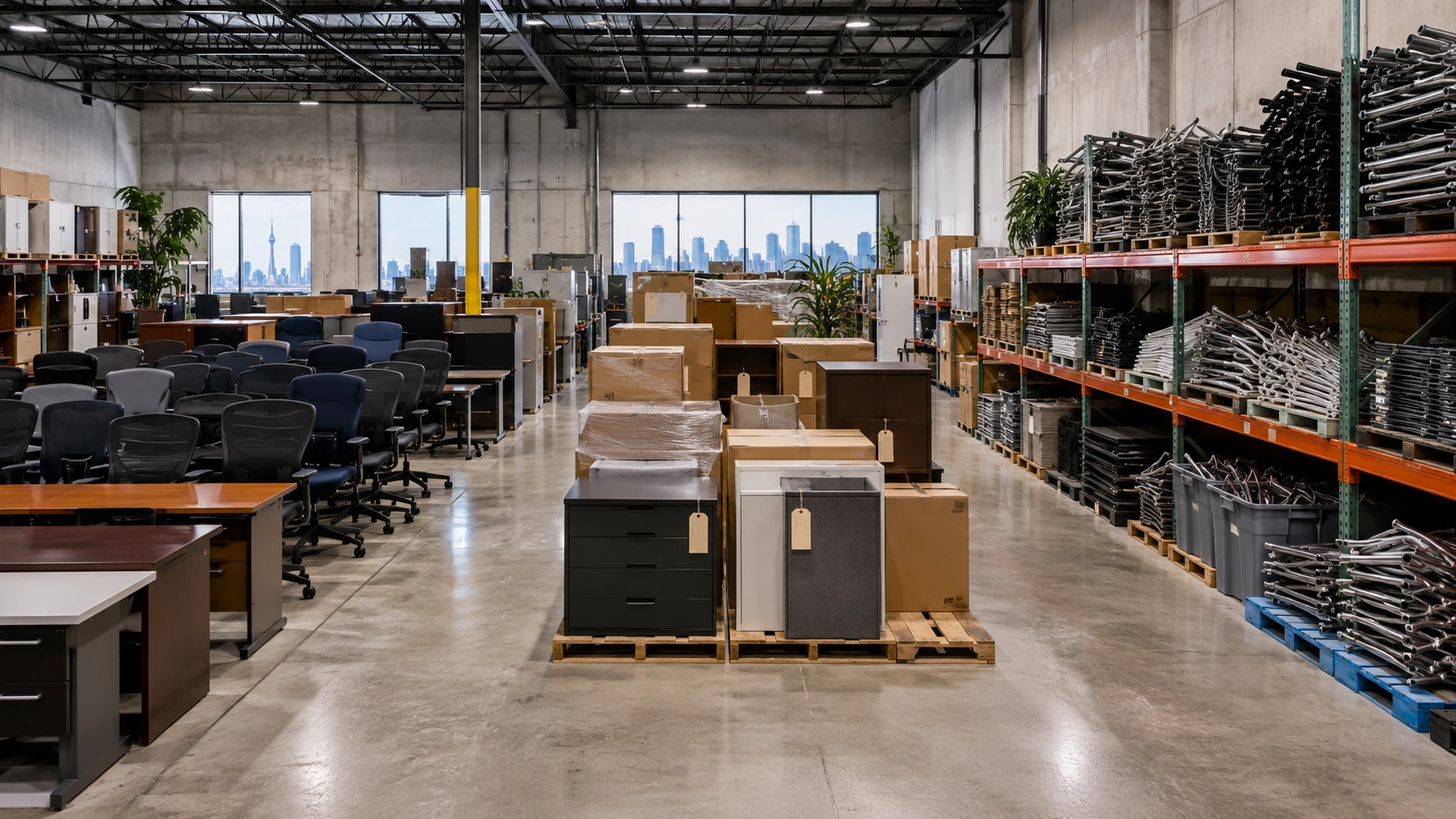
Michael's Global Trading provides commercial asset liquidation services across Toronto and Canada, covering retail inventory, office furniture, technology, warehouse equipment, and other commercial assets. The process includes asset evaluation, resale planning, removal, and routing remaining assets appropriately.
Get Better Outcomes by Starting the Liquidation Process Early
One of the main points in the original MGT article is that businesses benefit from involving a liquidator before the situation becomes urgent.
That remains important.
A retailer with several months to clear surplus inventory has more options than a retailer with several days before a location must be empty. More time allows the inventory to be assessed, suitable buyers to be approached, and different selling strategies to be considered before price reductions become the only available tool.
Starting early also gives the business time to decide what actually needs to be liquidated.
Surplus inventory can include:
- discontinued product lines
- seasonal stock
- customer returns
- overordered merchandise
- fixtures from a closing location
- equipment no longer required by the operation
- furniture from a downsizing or relocation
The first step should be separating genuine surplus from assets the business still needs.
MGT's current commercial liquidation process begins with an inventory review and asset assessment before a custom plan is developed around the location, timeline, and business objectives.
Give the Liquidator Enough Time to Reach the Right Buyers
A rushed sale can reduce the number of viable options.
If the business has time, a liquidator can determine whether certain assets are better suited to direct sale, bulk liquidation, resale through established buyers, or another disposition route.
The available timeline can also affect recovery. MGT's current liquidation guidance identifies tight lease deadlines and project timing as factors that can increase labour requirements and reduce flexibility.
The practical lesson is simple: contact a liquidator when surplus becomes a business problem, not only when it becomes an emergency.
Manage a Business Transition More Effectively
Retail liquidation often happens at the same time as other major changes.
A company may be:
- closing one location
- consolidating several stores
- downsizing
- restructuring
- changing its product mix
- dealing with overstock
- moving into a smaller warehouse
- winding down operations completely
Each situation creates more than an inventory problem.
Management may also be dealing with employees, landlords, lease deadlines, customers, suppliers, transportation, and the logistics of clearing the property.
A professional liquidator can take responsibility for the asset side of that transition so the internal team does not have to manage every individual sale and collection.
MGT's Toronto liquidation service, for example, combines asset recovery with scheduling, building access, removal, and final clearance for offices, warehouses, and other commercial facilities.
Bring Structure to a Complicated Situation
The value of professional support should be visible in the project plan.
Instead of approaching liquidation as an open-ended instruction to “sell everything,” establish:
- What is available for sale
- What must remain in operation temporarily
- When each asset can be released
- Which assets have meaningful resale potential
- Who will approve offers
- Who is responsible for dismantling, loading, and transportation
- What happens to anything that does not sell
That structure becomes particularly important when the business is still operating.
For example, a retailer closing one store while keeping several others open may want to transfer some inventory internally, liquidate another portion, and retain fixtures until the final trading day.
Those categories should be established before buyers begin collecting anything.
Get an Objective View of the Situation
The original article describes the professional liquidator as someone who can provide a necessary “wake-up call” when a retailer has been following an approach that is no longer working.
A better way to frame that benefit is objective asset and recovery analysis.
Businesses can become attached to what they originally paid for inventory or equipment. That does not necessarily reflect what those assets can recover today.
A professional liquidator can look at:
- current condition
- quantity
- buyer demand
- resale channels
- time available
- transport requirements
- the cost of holding the inventory longer
That creates a more practical basis for deciding whether to keep waiting, reduce pricing, sell in bulk, or clear the assets through another route.
Separate Original Cost From Current Recovery
A product's retail price, original acquisition cost, and liquidation value are three different numbers.
If a retailer has merchandise sitting in storage for months, continuing to hold it also creates a cost. Warehouse space, internal handling, inventory management, and the opportunity cost of the capital tied up in that stock all belong in the decision.
The objective is not necessarily to recover the original investment.
The objective is to determine which option produces the strongest result from the assets under the business's current circumstances.
MGT's current commercial liquidation approach emphasizes both asset value and the cost of completing the removal.
Develop a Liquidation Strategy Around the Actual Inventory
Another central point from the original article is that professional liquidation should be customized.
Consumer electronics should not automatically be handled the same way as apparel. Retail fixtures may have a different buyer market than unsold merchandise. Office furniture, warehouse equipment, and technology each require their own assessment.
A professional liquidator should therefore begin with the inventory rather than force every client into the same selling method.
Choose the Sales Method by Asset Category
Depending on the project, the strategy may involve:
- direct sales to commercial buyers
- bulk or whole-lot purchases
- auctions
- wholesale transactions
- staged sales
- resale of selected equipment
- donation or recycling for suitable remaining assets
Different categories can follow different paths within the same project.
For example, a store closure might involve selling high-demand inventory in bulk, separately liquidating fixtures and shelving, and routing old electronics through an appropriate recycling stream.
MGT's commercial asset liquidation service covers office, retail, and warehouse assets and develops the plan around the actual inventory rather than a single mandatory sales channel.
Consider the Entire Inventory, Not Just the Best Items
A common liquidation mistake is focusing exclusively on the assets with the highest resale value.
Suppose a buyer offers a strong price for selected merchandise but leaves the remaining inventory untouched. That may still be a good transaction, but only if the business understands what clearing the remainder will cost.
The complete calculation should consider:
Expected recovery minus the cost of selling and clearing the remaining assets.
A proposal covering the whole inventory may produce a better net result than a higher headline offer covering only the easiest products to sell.
Recover Working Capital From Surplus Inventory
Excess inventory consumes both money and space.
A business has already invested capital in the stock, and keeping slow-moving merchandise indefinitely does not recover that investment.
Liquidation gives the business an opportunity to convert at least part of that inventory back into cash.
MGT identifies overstock and discontinued inventory as common reasons businesses use commercial liquidation, with the objective of recovering value from merchandise that is no longer serving the operation.
The proceeds can then be redirected toward:
- newer inventory
- operating expenses
- relocation costs
- business restructuring
- new equipment
- other areas where the capital can be used more productively
Liquidation Is Not Limited to Businesses That Are Closing
The original article places significant emphasis on distressed retailers, but professional liquidation has a much broader use.
A healthy business may liquidate because it has ordered too much inventory, discontinued a product category, closed one underperforming location, consolidated warehouses, or changed its operating model.
MGT's current services specifically address overstock, downsizing, mergers and acquisitions, ownership transitions, closures, and other situations where businesses accumulate assets they no longer require.
The business itself does not need to be liquidated for its surplus assets to be liquidated.
Reduce the Internal Work Required to Sell Assets
Selling commercial inventory at scale takes time.
Someone has to:
- create the inventory
- photograph or document assets
- determine what is available
- contact potential buyers
- answer questions
- negotiate terms
- schedule access
- coordinate collection
- arrange transport
- manage unsold items
When employees handle these responsibilities internally, liquidation becomes another project competing with their normal work.
A professional liquidator consolidates those tasks.
MGT's service currently covers evaluation, buyer coordination, disassembly, heavy lifting, transport, and routing assets to resale or other destinations as appropriate.
For a business already managing a closure or restructuring, transferring that work to one accountable provider can be as important as the asset recovery itself.
Coordinate the Physical Clearance as Well as the Sale
A successful sale is not complete if the assets remain in the building.
Commercial liquidation often requires:
- equipment disassembly
- palletizing or staging
- loading
- truck coordination
- freight elevator bookings
- loading dock access
- transport
- final cleanout
Professional liquidators that also manage removal can connect the financial side of liquidation with the physical requirements of vacating the space.
MGT's current process includes planning around building policies and access, followed by disassembly, removal, sorting, and final confirmation once the project is complete.
This is particularly useful when a business faces a hard lease deadline.
Waiting until assets have sold before considering how they will physically leave can create a second problem at the end of the project.
What Should You Look for in a Professional Liquidator?
The original article recommends performing due diligence before choosing a provider. That remains one of the most important parts of the decision.
A liquidation company should be able to explain how it expects to handle the project before you authorize the work.
Ask About Relevant Experience
Find out whether the provider has handled the type of inventory you need to liquidate.
Retail stock, office furniture, electronics, and warehouse equipment involve different buyer markets and removal requirements.
MGT states that it has provided commercial liquidation services since 2013 and works across furniture, technology, retail, warehouse, and other commercial assets.
Ask How the Assets Will Be Evaluated
The provider should be able to explain what affects potential recovery.
For office furniture, MGT currently identifies condition, brand and model, matching sets, completeness, demand, access, and timing as factors affecting value. Similar market considerations apply when evaluating other commercial assets.
Avoid treating an optimistic estimate as a guaranteed sale.
Ask What Is Included in the Scope
Confirm whether the proposal includes:
- asset assessment
- buyer outreach
- disassembly
- removal
- transportation
- recycling
- disposal
- final clearance
If some of those services are excluded, determine who will perform them and what they are expected to cost.
Ask What Happens to Unsold Assets
A complete liquidation project needs a fallback.
MGT's commercial asset service includes routing assets to resale, recycling, or disposal as appropriate so the removal plan is not dependent on every item finding a buyer.
Do not leave this question until the final day.
Frequently Asked Questions About Professional Liquidators
What does a professional liquidator do?
A professional liquidator evaluates surplus business assets, determines possible resale opportunities, identifies buyers, helps negotiate transactions, and may coordinate the physical removal and final disposition of the assets. The exact scope depends on the provider and project.
Do you need a liquidator only when a business is closing?
No. Businesses use liquidation during downsizing, relocations, mergers, warehouse consolidations, product changes, office renovations, and surplus inventory clearances. MGT's current commercial liquidation services cover operating businesses as well as full closures.
Can a liquidator help with excess retail inventory?
Yes. Surplus, discontinued, and other excess inventory can be assessed for liquidation. The appropriate strategy depends on the merchandise, quantity, buyer demand, and available timeline.
Can a professional liquidator handle furniture and equipment as well as inventory?
Yes, depending on the provider. MGT's commercial liquidation services cover office furniture, computers and electronics, retail fixtures, warehouse assets, bulk inventory, and other commercial equipment.
How does professional liquidation help reduce project costs?
Recoverable asset value can offset some of the labour, transportation, and other costs associated with clearing a space. MGT's current pricing guidance distinguishes gross project cost from the net result after recovery is considered.
When should a business contact a liquidator?
Once the business knows it has significant surplus inventory or assets to clear. Earlier planning creates more flexibility for assessment, buyer outreach, sale scheduling, and removal than waiting until the final clearance deadline.
Quick Recap
- Start early: More time creates more options for selling inventory and commercial assets.
- Bring structure to the transition: A professional liquidator can manage the asset side while management focuses on the larger business change.
- Get an objective assessment: Current resale value and original purchase cost are not the same thing.
- Use the right strategy for the inventory: Different asset categories may require different buyers or sales methods.
- Recover working capital: Surplus inventory can be converted back into usable cash rather than remaining tied up in storage.
- Plan the removal as well as the sale: A completed transaction still needs an organized collection and clearance process.
- Choose the provider carefully: Relevant experience, transparent scope, realistic recovery expectations, and a plan for unsold assets all matter.
Ready to Liquidate Your Commercial Assets?
Professional liquidation works best when asset recovery and physical clearance are planned together.
Michael's Global Trading provides commercial asset liquidation services for businesses across Toronto and Canada. MGT handles office furniture, retail inventory, technology, warehouse equipment, fixtures, and other commercial assets, with evaluation, resale planning, removal, and final routing managed through one team.
Send us your inventory or photographs, location, and required completion date. We'll assess the assets and develop a liquidation plan around the value available, the work required, and the timeline for clearing the space.
Recommended Readings
Maximizing Profits With Office Liquidation
Office Furniture Disposal Costs Exposed: Landfill Fees, Labour, and Lost Value
Recommended readings:

Blogs & News
Get started on
your journey with us.