
The Role of Liquidators in Sustainable Business Practices
See how liquidation supports asset reuse, resale, donation, and recycling, and what records businesses can request to document each item's destination.
The Role of Liquidators in Sustainable Business Practices
Liquidators support sustainable business practices by finding new uses for surplus assets while recovering value for the businesses releasing them. Furniture, equipment, and unsold inventory do not necessarily lose their usefulness when one company no longer needs them. A liquidation process connects those assets with buyers who can put them back to work.
The opportunity is to make asset recovery part of the business’s operating plan, rather than leave it until the final stage of a clearance. Assess what can remain in use, identify suitable destinations, and measure the financial and environmental results separately.
Turning Excess Into Opportunities
Preventing Waste Before Disposal Becomes the Default
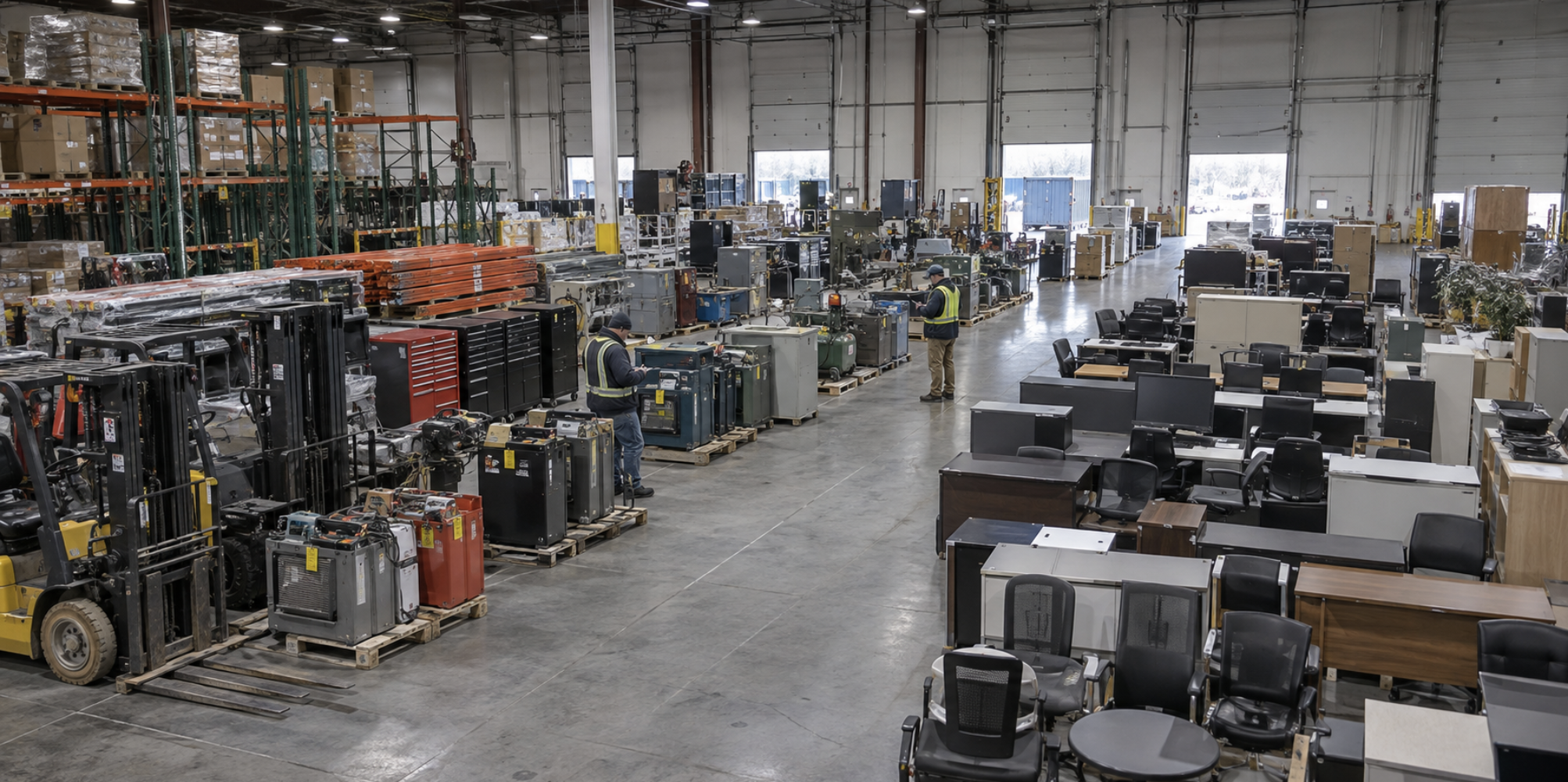
The first contribution a liquidator makes is assessment. Instead of treating the outgoing inventory as a single disposal load, the work starts by identifying assets suitable for resale, donation, or recycling. These are distinct routes, each requiring an appropriate destination and a plan for getting the items there.
For your business, make that assessment part of the removal brief. Separate assets being retained from those leaving the premises, and provide condition notes for the outgoing inventory. Do not assume that furniture without an internal use has no external value.
An empty room is a clearance result. Knowing where the contents went is the sustainability result.
Recovering Value From Surplus Assets
Liquidation adds a recovery opportunity to a project that might otherwise consist entirely of removal expenses. For office furniture, the financial comparison should include potential resale proceeds alongside labour, transport, and the cost of handling the remaining inventory.
Keep the expected recovery and project costs visible as separate figures. Selling usable assets may help offset the transition, but the gross selling price is not the amount the business retains.
That distinction also helps management decide where to focus its effort. Compare a proposal covering the whole inventory with the cost of selling selected items and clearing everything else separately.
Circular Economy and Liquidation
A circular economy aims to retain the value of products and materials through activities such as reuse, repair, refurbishment, and recycling. Environment and Climate Change Canada describes it as an alternative to the linear process of extracting resources, making products, and discarding them after use.
Liquidation contributes at the point where an asset changes owners. The sale creates an opportunity for continued use rather than making disposal the automatic next step.
Extending the Useful Life of Products
An asset can reach the end of its usefulness to one business before reaching the end of its service life. Environment and Climate Change Canada identifies transferring a product to another user as a way to help it fulfil that remaining life. Repair and refurbishment can also restore functionality or extend service.
Consider an office replacing its meeting-room furniture because the new layout requires smaller tables. If the existing tables remain suitable for another workplace, their removal does not need to mark the end of their use. The assessment should focus on condition and the next user’s requirements, not only the reason the current owner is replacing them.
Reducing the Need for Replacement Production
Reuse and refurbishment can reduce waste, resource extraction, and greenhouse gas emissions associated with products. These are benefits identified in the federal government’s guidance on retaining product value.
For a specific project, distinguish that general opportunity from a measured carbon saving. Ask whether the reused asset is replacing a new purchase and what assumptions support any emissions estimate. Do not treat the number of items collected as proof of a particular carbon reduction.
The purchasing decision matters too. Assess used equipment against the work it needs to perform. Keeping an unsuitable asset in circulation is not the objective; keeping useful assets working is.
Beyond Products: The Broader Business Impact
Supporting Local Businesses and Community Organisations
Where suitable local buyers exist, liquidation can move equipment and inventory between businesses in the same market. The seller recovers value, while the buyer gains access to assets through the secondary market rather than purchasing everything new.
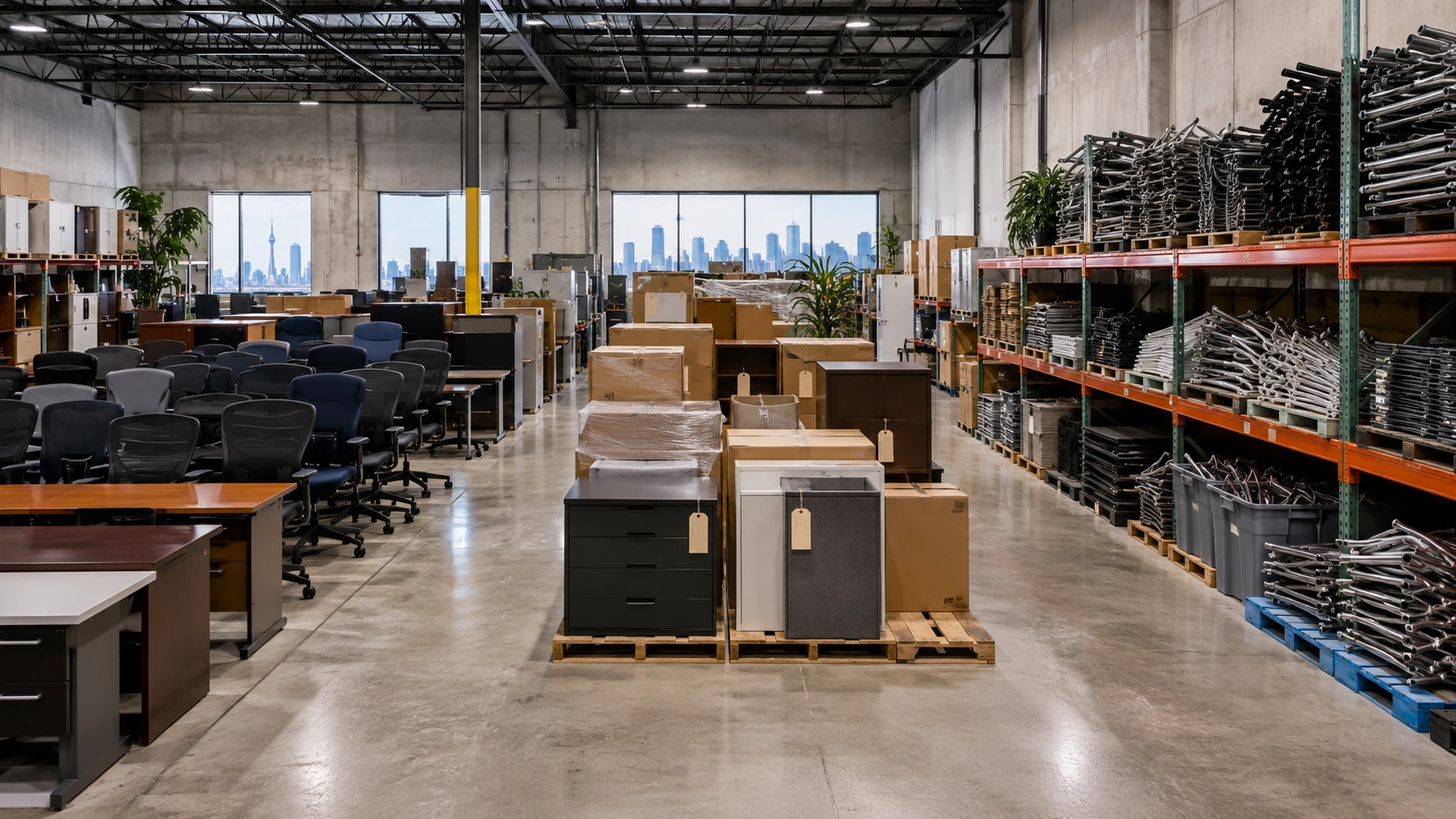
Donation provides another route for usable furniture. Michael’s Global Trading coordinates furniture donations with local charities and nonprofit partners, assessing items against both condition and recipient demand before arranging delivery. This adds a community-use option where a suitable recipient can be confirmed.
Start those conversations before the final removal date. Confirm what the recipient can accept rather than treating donation as an unlimited destination for anything that remains unsold.
Contributing to Financial Resilience
Recovering money from surplus assets can support cash flow and reinvestment during a business transition. Liquidation can also help a company clear inventory that no longer fits its direction and redirect resources towards current priorities.
For a business under financial pressure, establish how much recovery will actually be available for operating expenses, including staffing. A projected sale is not secured funding, and an asset sale alone does not establish that jobs can be retained.
Releasing Space Without Assuming Automatic Savings
Removing surplus assets frees the space they occupied, but the financial and environmental consequences need a separate assessment.
Identify what will change after collection. Will the business stop paying for external storage? Avoid moving unwanted equipment to another site? Reduce the floor area it maintains? Attach the expected benefit to a specific operational change rather than assuming fewer items automatically means lower rent or energy use.
Making Liquidation Part of Sustainable Business Planning
A liquidation strategy should help the business adapt without treating every equipment change as an emergency clearance. Commercial liquidation services can cover selected furniture, technology, fixtures, and inventory, with the sale and removal approach developed around the assets and project requirements.
Build three decisions into each planned transition:
- Identify genuine surplus. Confirm what the business no longer needs before seeking offers or approving removal.
- Agree on destinations. Establish the proposed sale, donation, recycling, and disposal routes, including responsibility for unsold items.
- Define the evidence required. Specify what records should be provided when the project is complete.
Document the Outcome, Not Just the Intention
MGT’s sustainability guidance recommends an opening inventory and a final disposition report showing what was resold, donated, recycled, or disposed of. Buyer records, donation confirmations, and recycling receipts provide supporting evidence for those destinations.
Use that information to assess the completed project. Keep the amount recovered financially separate from the quantities reused or recycled. Each measures a different result.
For future planning, review the items that were difficult to place. Use those findings when deciding what to buy, retain, or replace during the next equipment cycle.
Frequently Asked Questions About Sustainable Liquidation
Does a business have to be closing to use a liquidator?
No. Liquidation can support downsizing, location consolidation, or the removal of surplus inventory while the business continues operating. The scope can cover selected assets rather than an entire facility.
Can one project include resale, donation, and recycling?
Yes. MGT’s landfill diversion process assesses the inventory, sorts assets by destination, and coordinates the appropriate resale, donation, or recycling route. Confirm the scope for anything that cannot follow those routes before work begins.
How can a business confirm its sustainability results?
Request records that connect the original inventory with the final destinations. Review any diversion figure against the underlying quantities or weights, and keep carbon estimates separate from documented physical outcomes. A collection invoice alone does not answer where each asset went.
Ready to Build a More Sustainable Asset Clearance Plan?
Michael’s Global Trading provides commercial asset liquidation across Toronto and Canada, combining asset assessment with coordinated sale and removal. Our landfill diversion services help identify opportunities for resale, donation, and recycling, with diversion documentation available on request.
Contact us with your inventory, photographs, and required completion date. We’ll assess the outgoing assets and outline a plan that connects recovery potential with an appropriate destination for the equipment your business no longer needs.
Recommended Readings
How Office Furniture Liquidation Supports Corporate ESG and Sustainability Goals explores reuse, diversion measurements, and project documentation.
Office Furniture Disposal Costs Exposed: Landfill Fees, Labour, and Lost Value examines the expenses and recovery opportunities to consider before approving a clearance.
Recommended readings:

Blogs & News
Get started on
your journey with us.