
Steps to Liquidating Your Business Equipment
When it comes to a business liquidation closing, many things need to be considered beforehand. After all, a business liquidation closing involves many steps that need to be taken for everything to end on smooth terms.
The Difference Between Wholesale Suppliers and Liquidators
Wholesale suppliers and liquidators can both provide businesses with merchandise below typical retail pricing, but they operate at different points in the distribution process.
A wholesaler generally purchases merchandise for resale to other businesses. A liquidator focuses on moving surplus, closeout, returned, or otherwise unwanted inventory out of a business and into the secondary market. For retailers buying inventory for resale, that difference can affect sourcing, lot size, pricing, product condition, and ultimately the margin available on the merchandise.
The distinction is not that one model is always better than the other. It is that businesses need to understand where the inventory came from, how many times it has changed hands, what has happened to the lot, and what the total acquisition cost will be before it reaches their shelves.
What Is a Wholesale Supplier?
Statistics Canada defines wholesale trade as an intermediate step in the distribution of goods. Wholesalers typically sell merchandise to retailers, businesses, and institutional customers, often in larger quantities than would be sold through consumer retail channels. Statistics Canada's definition of wholesale trade
In the liquidation market, a wholesaler may purchase a large quantity of surplus or liquidated merchandise and resell it to other businesses.
That can involve buying a truckload or large inventory position, separating it into smaller lots, and reselling those lots at a markup. Smaller buyers that could not reasonably purchase or process an entire truckload may therefore gain access to quantities that better match their business.
That additional resale step has a cost. The wholesaler needs enough margin to cover the purchase, storage, handling, administration, and eventual resale of the merchandise.
Why Businesses Buy From Wholesalers
Buying through a wholesaler can still make sense when convenience or quantity matters more than getting as close as possible to the original inventory source.
A wholesaler may be able to provide:
- Smaller quantities: A retailer may need several pallets rather than an entire truckload.
- More predictable assortments: Inventory may already have been organized into categories or product groups.
- Simpler purchasing: The wholesaler may have stock ready for immediate business-to-business sale rather than requiring participation in a liquidation process.
- Regular supply: Some wholesalers maintain ongoing inventory that allows businesses to purchase repeatedly.
The tradeoff is that another business has generally added its own operating costs and margin to the merchandise.
For a reseller, the question is whether the added convenience justifies the resulting acquisition cost.
What Is a Liquidator?
A liquidator helps businesses turn inventory and other commercial assets they no longer need into recoverable value.
That inventory can come from many situations, including:
- excess or overstock inventory
- customer returns
- discontinued products
- seasonal merchandise
- store closures
- warehouse consolidation
- business downsizing
- complete business liquidation
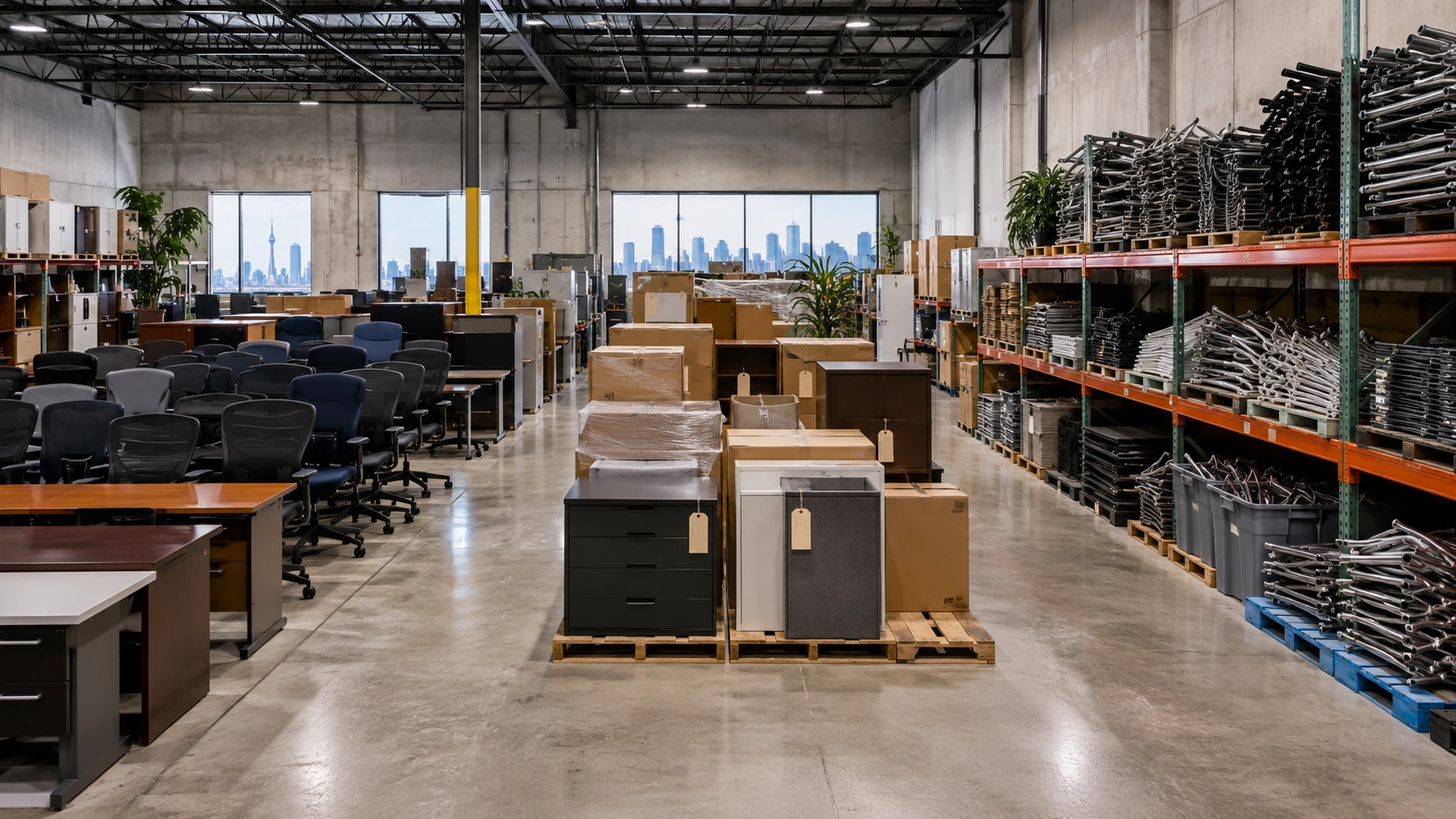
Michael's Global Trading handles these types of projects through its commercial asset liquidation services, covering inventory as well as office, retail, and warehouse assets. MGT's current process begins with an asset review, followed by a plan for resale, removal, recycling, or other appropriate disposition routes.
A liquidator can therefore work on the seller's side of the transaction, helping a business identify buyers and move surplus assets into the secondary market.
That is different from a traditional wholesaler whose primary business is maintaining inventory for resale.
Liquidators Can Reduce the Number of Resale Steps
One of the main ideas in the original MGT article is the opportunity to get closer to the source of liquidated inventory.
When a retailer purchases merchandise after it has passed through several resellers, each transaction can introduce another margin. If the original business sells its surplus inventory through a liquidator directly to a business buyer, there may be fewer resale steps between the original owner and the final reseller.
That can create more room for margin.
The important distinction, however, is that not every liquidator operates in exactly the same way. A liquidator may purchase inventory outright, broker or coordinate a sale, or market assets on behalf of the seller.
The buyer should therefore ask:
- Who currently owns the merchandise?
- Is the liquidator selling its own inventory or facilitating a sale for another business?
- Has the inventory already been purchased and resold?
- Are there commissions, buyer fees, or other transaction costs?
- Who is responsible for freight and collection?
Understanding the transaction structure tells you more than the word “liquidator” by itself.
What Does Cherry-Picking Mean in Liquidation Inventory?
Another concern raised in the original article is cherry-picking.
Cherry-picking occurs when the most desirable products are removed from a larger lot before the remainder is offered for sale. For example, someone purchasing a mixed truckload might separate the newest, highest-demand merchandise and sell it independently, then offer the remaining products as another lot.
That does not automatically make the remaining inventory a bad purchase. The problem arises when the buyer believes they are purchasing an untouched or original lot when the inventory has actually been sorted.
The solution is not to assume that every wholesaler cherry-picks merchandise or that every liquidator leaves lots untouched. Instead, verify what you are buying.
Ask Whether the Lot Has Been Sorted
Before purchasing liquidated merchandise, establish whether the inventory is:
- an original lot from the business releasing it
- a complete pallet or truckload
- a sorted lot assembled from a larger shipment
- a category-specific selection
- an assortment created by the current seller
If merchandise has been sorted, that should simply become part of your assessment of the lot.
Review the Manifest Carefully
A manifest is one of the most useful tools when evaluating a liquidation purchase because it identifies what the lot is represented to contain.
Where available, review:
- product descriptions
- quantities
- models or SKUs
- stated condition
- retail or reference values
- total unit count
The manifest should be considered alongside photographs and the seller's terms. It is a purchasing tool, not a guarantee that every item will have identical resale value.
For businesses on the selling side, MGT's commercial liquidation process similarly begins with an inventory and asset review so the available merchandise and equipment can be evaluated before a resale strategy is developed.
The Cost Difference Between Wholesale Suppliers and Liquidators
Price is often the biggest reason businesses compare wholesale suppliers with liquidation sources.
When a wholesaler buys merchandise and then resells it, the purchase price needs to support the wholesaler's own operating costs and profit margin. Buying closer to the business originally releasing the inventory can potentially remove one of those markups.
But the invoice price alone does not tell you which option is cheaper.
A liquidation lot may require your business to purchase a much larger quantity. You may also be responsible for freight, unloading, sorting, testing, storage, repairs, or disposal of merchandise that cannot be resold.
A smaller wholesale lot might cost more per item but require less capital and create less operational work.
Calculate the Landed Cost
Before comparing two inventory sources, calculate what the merchandise will actually cost by the time it is ready for resale.
Include applicable:
- purchase price
- buyer or transaction fees
- freight
- unloading
- storage
- sorting
- testing
- repairs
- repackaging
- disposal or recycling of unusable products
Then estimate how many units are realistically sellable.
For example, a lower-priced liquidation lot is not necessarily the better deal if a significant portion of the inventory cannot be sold. Conversely, a higher-cost wholesale lot may sacrifice too much margin if your operation is equipped to process liquidation inventory efficiently.
The useful number is the cost per sellable unit, not simply the cost per unit purchased.
Wholesale Suppliers vs. Liquidators: Which Is Better for Your Business?
The answer depends on how your business buys and resells merchandise.
A Wholesaler May Make More Sense When:
- you need relatively small quantities
- you want a more standardized assortment
- your business has limited storage space
- you need inventory on a predictable purchasing schedule
- you do not have the resources to sort and process large mixed lots
Liquidation May Make More Sense When:
- you can purchase inventory in larger quantities
- your business has warehouse and processing capacity
- you are comfortable evaluating mixed or surplus merchandise
- you can manage freight and collection requirements
- maximizing purchase margin is more important than having a highly standardized lot
There is no benefit in buying a cheaper truckload if your business cannot store, sort, or sell it.
Similarly, a convenient wholesale source may not be the strongest option if repeated markups leave too little margin between acquisition cost and your realistic resale price.
The Seller's Perspective: Why Businesses Use Liquidators
The comparison looks different from the perspective of the business that owns the surplus inventory.
A company may have thousands of units of overstock, fixtures from a closing retail location, obsolete inventory taking up warehouse space, or assets left over after a consolidation.
Selling those assets individually can consume significant internal time.
A commercial liquidator can assess the inventory, develop a recovery strategy, contact potential buyers, and coordinate removal. MGT's current commercial asset liquidation service covers office, retail, and warehouse assets and includes evaluation, resale planning, removal, and final disposition.
For the seller, the objective is not necessarily to obtain the highest imaginable unit price. It is to maximize the practical recovery from the inventory while meeting the company's deadline for clearing the assets.
A buyer willing to take an entire lot may therefore be more valuable than several buyers offering more for selected products while leaving the difficult inventory behind.
How to Evaluate a Liquidation Inventory Purchase
Before purchasing through either channel, complete a basic commercial assessment.
1. Understand the Source
Ask where the inventory originated and how it reached the current seller.
Knowing the source helps you understand whether you are looking at original surplus inventory, customer returns, previously resold merchandise, or an assortment assembled by another supplier.
2. Confirm the Condition
Do not treat terms such as “returns,” “overstock,” or “liquidation” as condition grades.
Ask what has actually been inspected or tested and what remains unknown.
3. Understand the Lot
Determine whether the lot is complete, sorted, manifested, or mixed.
If the seller provides a manifest, use it to calculate the expected resale opportunity rather than relying on the stated retail value of the entire shipment.
4. Calculate the Full Acquisition Cost
Add the purchase price and all costs required to receive and prepare the inventory for sale.
Then divide that figure by the number of units you realistically expect to sell.
5. Use Realistic Resale Prices
Retail price and realistic secondary-market selling price are not always the same.
Build your margin estimate around what your customers are actually likely to pay.
6. Understand What Happens to Unsellable Inventory
Some liquidation purchases may include damaged, incomplete, obsolete, or otherwise difficult-to-sell products.
Decide how your business will handle those units and include that cost in the purchase calculation.
Frequently Asked Questions About Wholesalers and Liquidators
Are wholesalers and liquidators the same thing?
No. Wholesale is a distribution model in which businesses sell merchandise to other businesses. Liquidation focuses on converting surplus or unwanted business inventory and assets into cash or another disposition route. A company can participate in both activities, which is why the labels sometimes overlap.
Are liquidators always cheaper than wholesalers?
No. Buying closer to the original inventory source can reduce additional resale markups, but the total cost depends on lot size, fees, freight, condition, and how much of the merchandise can actually be resold.
Do liquidators always sell directly for major retailers?
No. Liquidators use different business models. Some purchase assets outright, while others coordinate or facilitate sales for businesses releasing inventory. Verify the source and transaction structure rather than assuming a direct relationship.
Do wholesalers always cherry-pick liquidation lots?
No. The original article was too broad on this point. Some inventory may be sorted or broken into smaller lots, but that does not apply to every wholesaler. Buyers should ask whether the merchandise has been sorted and evaluate the actual lot being offered.
What is a liquidation manifest?
A manifest is an inventory record describing what is represented to be included in a pallet, truckload, or other lot. It may contain quantities, product descriptions, models, condition information, and reference values. Buyers should review it alongside photographs and the seller's terms.
Is liquidation inventory only available when companies go out of business?
No. Businesses liquidate inventory for many reasons, including overstock, discontinued products, customer returns, downsizing, warehouse consolidation, and changes in product strategy. Business closure is only one source of liquidation inventory.
Quick Recap
- Wholesalers resell merchandise: Wholesale trade is an intermediate part of the distribution system, generally selling goods to other businesses.
- Liquidators move surplus assets: Liquidation focuses on recovering value from inventory or assets a business no longer needs.
- Fewer resale steps can mean more margin: Buying closer to the original source may reduce additional markups.
- Verify lot integrity: Ask whether merchandise is original, sorted, broken down, or reassembled into a new lot.
- Compare the complete cost: Purchase price, freight, fees, processing, and unsellable inventory all affect profitability.
- Choose based on your operation: A lower-priced lot only creates an advantage when your business has the capital, storage, and processing capacity to handle it.
The Michael's Global Trading Difference
For businesses holding excess inventory, the challenge is often finding buyers without allowing the sale process to interfere with normal operations.
Michael's Global Trading provides commercial asset liquidation services across Toronto and Canada for businesses clearing surplus inventory, retail assets, office furniture, technology, and warehouse equipment. MGT evaluates the available assets, develops a plan around the inventory and timeline, coordinates resale and removal, and routes remaining assets appropriately.
If your business has overstock, closeout merchandise, equipment, or other commercial assets to liquidate, send us your inventory, photographs, location, and required completion date. We'll review the assets and outline the most practical approach for recovery and clearance.
Recommended Readings
Office Furniture Disposal Costs Exposed: Landfill Fees, Labour, and Lost Value
What Does a Commercial Liquidation Company Actually Do? A Process Breakdown
Recommended readings:

Blogs & News


Get started on
your journey with us.