
Types of Warehouse Equipment That Can Be Liquidated
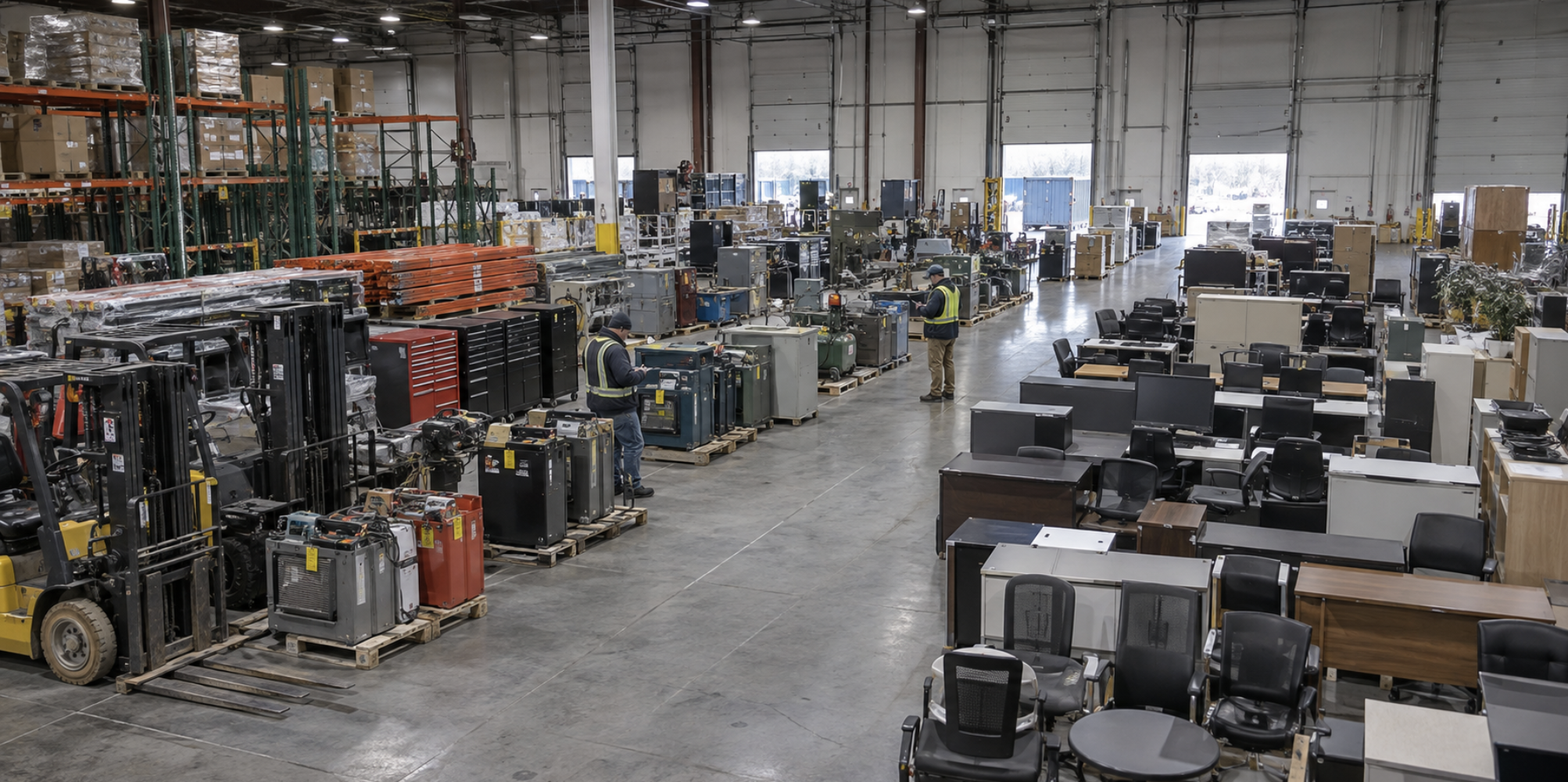
Warehouse Liquidators are becoming increasingly essential. This is because there could be a ton of reasons why someone would feel the need to liquidate an asset.
Types of Warehouse Equipment That Can Be Liquidated
Racking, conveyors, shelving, carousels, and mezzanines can all be assessed for warehouse equipment liquidation. Before clearing these systems out, establish which assets have resale potential and what it will take to remove them.
The useful distinction is between equipment your business no longer needs and equipment another business can still use. A liquidation assessment considers both resale potential and the complexity of the removal. That is the approach behind MGT’s warehouse liquidation service, which combines asset evaluation with a plan for dismantling, transport, and clearance.
1. Racking Systems
Racking belongs in the initial asset assessment, not just the clearance estimate. Include pallet and cantilever racks, drive-in and pushback systems, carton and pallet flow racks, and pick modules. The condition of the equipment matters to its potential recovery.
Start by identifying the systems available for sale. MGT’s inventory process records quantities, condition, manufacturers, models, and supporting information before developing a recovery estimate. Apply that structure to the racking rather than describing the entire installation as one undifferentiated lot.
Condition needs more than a distant photograph. The Canadian Centre for Occupational Health and Safety identifies structural damage, missing bracing, and incorrect assembly among the problems that can compromise pallet racking. Flag known damage and missing components for assessment rather than presenting every section as ready for reuse.
Ask for the resale assessment and the dismantling scope together. MGT’s warehouse pricing guidance identifies rack type, anchoring, access, and labour among the factors affecting project cost. A purchase offer needs to be considered alongside the work required to release the equipment.
2. Warehouse Conveyors
Conveyor equipment suitable for assessment includes roller, skatewheel, and belt conveyors, along with merge, chute, curve, and bend conveyors. Age, condition, and functionality affect their liquidation value.
Prepare the information a buyer would need to assess the system. BDC’s equipment-assessment guidance identifies model numbers, purchase dates, operating condition, maintenance schedules, and warranty details as relevant records. For a conveyor installation, use those records to distinguish what is operational from what has not been tested or requires attention.
Make the sale scope explicit. Identify the equipment included in the offer and clarify who is responsible for disconnection, dismantling, and collection. MGT’s warehouse decommissioning service treats equipment disconnection, teardown, removal, and site cleanout as defined parts of the project rather than assuming they follow automatically from a sale.
A conveyor should be assessed as equipment first. The removal plan should follow a decision about its next use, not make that decision by default.
3. Warehouse Shelving
Backroom, bulk rack, rivet, and steel shelving belong on the liquidation inventory alongside larger warehouse systems. Do not exclude them simply because they are less prominent than conveyors or racking.
For the assessment, organise shelving into identifiable groups and record the quantities and condition of each. Use photographs and available manufacturer information to support the inventory. These are the same details MGT uses when preparing an asset manifest and estimating recovery by category.
Avoid assuming that every shelving lot will find a buyer. MGT confirms potential resale credits after inspection and an assessment of market demand. Include the shelving in the review, then decide whether resale or another removal route is appropriate for the actual inventory.
The practical objective is to avoid two opposite mistakes: disposing of usable shelving without an assessment, or planning the project around a sale that has not been established.
4. Storage Carousels
Storage carousels should also be considered before disposal. Their role in organising inventory and using warehouse space efficiently makes them a distinct category within the liquidation assessment.
For these systems, the assessment should go beyond age. Kardex’s guidance on used carousels recommends reviewing operating history, maintenance records, original documentation, configuration, and the availability of service and spare parts. A newer unit is not automatically in better condition than an older one with lighter use and documented maintenance.
Gather the serial number and available service records before requesting an offer. Identify the trays, carriers, controls, and other components included in the proposed sale, and disclose anything missing. Kardex notes that configuration changes and replacement components can affect the economics of buying a used system.
Removal also needs specialist planning. Kardex’s relocation service includes operational checks before dismantling, site assessments, and disassembly and reassembly by trained technicians. Establish who will handle that work before treating a carousel as a straightforward collection.
5. Warehouse Mezzanines
Include free-standing, rack-supported, and shelving-supported mezzanines in the assessment. These installations should not be overlooked simply because they form part of the warehouse’s existing layout.
Some mezzanine systems are designed for dismantling and reuse. Mecalux, for example, describes its mezzanine floors as systems that can be disassembled, relocated, extended, or modified. That supports considering reuse, but it does not establish that every mezzanine can be transferred unchanged to another building.
Have the particular installation assessed before agreeing on a sale. Mezzanine manufacturer Doity notes that the original design affects relocation, especially where the structure was built for a specific space. Layout, access points, and loading requirements may need adjustments at the receiving site.
Evaluate the structure and the removal work together. Confirm which components are included, what documentation is available, and who will coordinate dismantling and transport. Keep the expected sale proceeds separate from the cost of completing that work.
What Determines Whether Warehouse Equipment Is Worth Liquidating?
An equipment category tells you what to assess. It does not establish a selling price.
BDC’s used-equipment valuation guidance recommends selecting a valuation method that fits the sale. Comparable transactions can help establish value, with adjustments for age, condition, and remaining useful life. Specialised or highly customised equipment may require a different approach where an active market is difficult to identify.
The available selling window also matters. BDC distinguishes orderly liquidation value, which allows reasonable time to find a buyer, from forced liquidation value, which assumes an immediate auction. Both are gross estimates, not the amount remaining after selling expenses.
Request a proposal that separates expected recovery from the cost of completing the project. MGT’s warehouse assessment considers labour, equipment, transport, and access requirements alongside potential resale credits. This provides a more useful basis for a decision than a headline equipment value alone.
Frequently Asked Questions About Warehouse Equipment Liquidation
Should equipment be dismantled before requesting an assessment?
Arrange the assessment before commissioning dismantling where practical. MGT’s warehouse process begins with a walkthrough and asset evaluation, followed by removal planning. For automated equipment, the manufacturer’s guidance may also call for operational checks before disassembly.
Does every equipment category need to use the same sales method?
No. MGT’s commercial liquidation process selects sales methods by asset category, including direct sales, auctions, and wholesale transactions. Ask how the proposed approach fits each significant part of the inventory rather than assuming one method must cover everything.
Can equipment that does not sell still be included in the clearance?
Yes, when that work is included in the agreed scope. MGT’s warehouse service routes assets to resale, recycling, or disposal and coordinates the remaining cleanout. Confirm those responsibilities before work begins so the project accounts for unsold equipment as well as successful sales.
Ready to Assess Your Warehouse Equipment?
Michael’s Global Trading provides warehouse liquidation services across Toronto and Canada, with equipment appraisals, buyer outreach, and coordinated removal. We review the warehouse layout, inventory, and deadline before developing the project plan.
Contact us with photographs, an equipment list, and your required completion date. We’ll assess the assets and outline the sale and removal scope before you commit to clearing the warehouse.
Recommended Readings
The Essential Warehouse Equipment Checklist covers the main equipment categories used throughout a warehouse.
What Does a Commercial Liquidation Company Actually Do? A Process Breakdown explains the work from asset assessment through sale and clearance.
Recommended readings:

Blogs & News


Get started on
your journey with us.